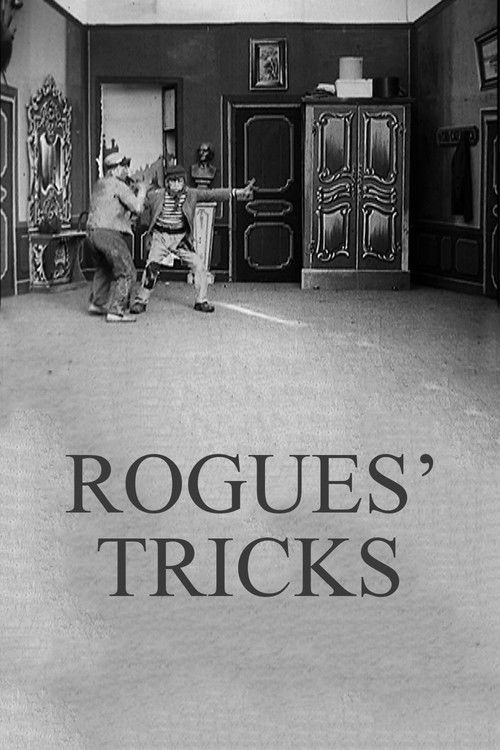
Rogues' Tricks
1907
No user ratings available yet
Representation score: 1.6 out of 10
Representation Score
Minimal
1913
Director
Giovanni Pastrone
Runtime
6 minutes
Average Rating
No ratings yetNew Showbiz Analysis
Giovanni Pastrone’s 1913 comedy is a product of its time, emphasizing technical innovation and dream-like narratives over social representation. The narrative focuses on a bourgeois domestic setting, limiting the range of character diversity. The film adheres to the social norms of early 20th-century European cinema, relying on established archetypes such as the law-enforcing male and the passive female, which reinforce traditional power dynamics. Ultimately, the work serves as a technical showcase for early cinema. It lacks the broad representation seen in modern cinema, focusing instead on a narrow, homogeneous social perspective.
Category Breakdown
The film does not include any LGBTQ+ characters or themes. The story revolves around a traditional husband and wife relationship without any queer undertones.
Gender roles follow a traditional pattern where the wife is passive and unengaged, while the husband embodies authority through his police uniform.
The setting reflects the homogeneous society of 1913 Italy. There is no evidence of non-white actors or ethnic diversity within the upper-class family.
The story upholds Western middle-class values and emphasizes the sanctity of home life. It uses familiar themes of law and order without questioning institutional authority.
There is no mention of characters with visible or invisible disabilities in the film's plot.
Present on Screen
Limited or Absent
Official Synopsis
A bourgeois gentleman gets excited reading about cops and robbers on the newspaper. His wife, bored by his comments, falls asleep and right after, with the help of the warmth of the living room, he falls asleep too. Then, the shadow of an escaping robber comes to life from the newspaper. Suddenly the dreamer wakes up wearing the cop uniform and starts chasing him.
1907
1924
1913
1915
1918

1915
1903
1903
No reviews yet. Be the first to share your thoughts on this movie!
Use the rating form above to leave a star rating and optional review.