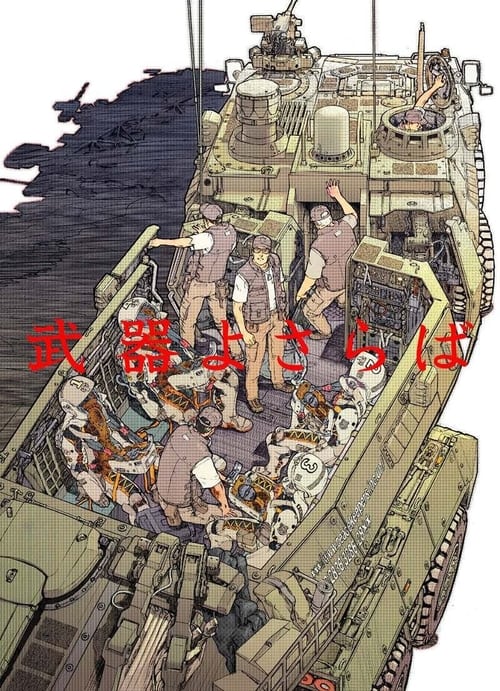
A Farewell to Weapons
2013
No user ratings available yet
Representation score: 4.1 out of 10

Representation Score
Good
2015
Director
Hiroyasu Kobayashi
Runtime
8 minutes
Average Rating
No ratings yetNew Showbiz Analysis
Cassette Girl is a science fiction animation that critiques systemic censorship. It centers on a female protagonist fighting to preserve obsolete media against a controlling robotic regime. The film’s strength lies in its ideological framework, which champions individual ability to act and the protection of cultural memory. It successfully challenges traditional power hierarchies by positioning a woman as the driver of the plot. However, the work lacks specific identity-based representation. While it explores themes of otherness through its setting, it does not provide explicit details regarding racial or LGBTQ+ demographics.
Category Breakdown
The film does not explicitly depict LGBTQ+ identities or relationships that challenge the assumption that everyone is straight or cisgender. Instead, it focuses on the tension between individual expression and state censorship.
A young woman serves as the main character who resists the militaristic, patriarchal authority of robotic systems. This challenges traditional science fiction clichés by giving her a significant role in driving the story.
While specific racial demographics are not detailed, the film uses robotic antagonists to explore themes of otherness. This serves as a metaphor for the suppression of underrepresented histories.
The film critiques institutional authority by portraying the Media Police as an oppressive force. It emphasizes the importance of preserving subjective human expression over standardized technological mandates.
There is no indication that disability or neurodivergence plays a role in the character arcs. The plot mechanics do not center on physical or mental impairments.
Present on Screen
Limited or Absent
Official Synopsis
In a futuristic world where militaristic robots known as the “Media Police” have outlawed entertainment and banned outdated media formats, a young woman and her robotic companion aim to recover vintage content stored on video cassettes and battle their evil robot overlords to protect “obsolete” media from being lost forever.
2013

2004

2013
1993
2015

2009

2025
1991
No reviews yet. Be the first to share your thoughts on this movie!
Use the rating form above to leave a star rating and optional review.