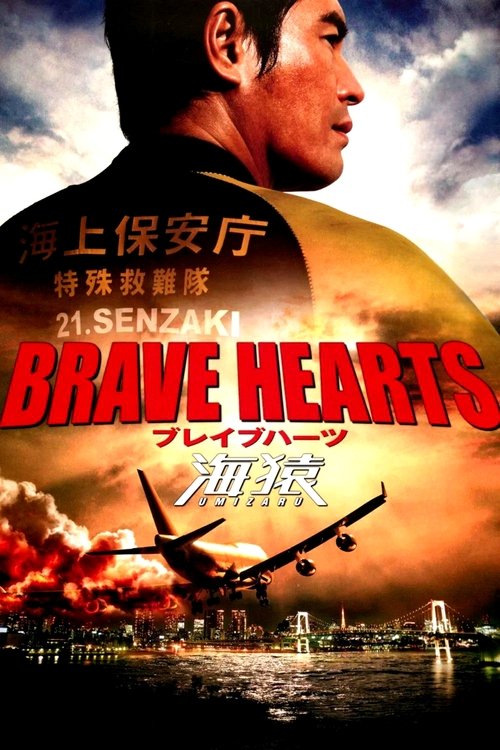
Brave Hearts: Umizaru
2012
No user ratings available yet
Representation score: 1.8 out of 10
Representation Score
Minimal
2010
Director
Eiichiro Hasumi
Runtime
129 minutes
Average Rating
No ratings yetNew Showbiz Analysis
The film is a traditional maritime drama that emphasizes institutional duty and professional hierarchy. It celebrates disciplined service and heroism within a structured authority. While it offers a focused look at the Japan Coast Guard, it adheres strictly to conventional social norms. Ultimately, the lack of diverse identities and reliance on homogeneous structures results in a low diversity profile.
Category Breakdown
The film does not include any LGBTQ+ characters or non-traditional gender identities. The interpersonal dynamics center around traditional marriage and parenthood, particularly the relationship between Daisuke and Tamaki.
The story emphasizes a masculine framework of physical bravery and technical expertise. Female characters mainly serve as emotional anchors in domestic roles rather than playing a key role in the rescue operation.
The cast is mostly made up of people from a similar ethnic background, reflecting a local Japanese context. It portrays a consistent ethnic depiction of Japanese civil service without much multi-ethnic representation.
The narrative upholds traditional values such as patriotism and professional ethics. Conflict is framed through professional duty rather than systemic critiques of social or political institutions.
There are no prominent depictions of visible or invisible disabilities. Characters are defined by their physical abilities needed for rigorous maritime rescue tasks.
Present on Screen
Limited or Absent
Official Synopsis
While a menacing typhoon approaches, an accident at the giant natural gas plant Regalia occurs. Japan Coast Guard rescue divers Daisuke Senzaki (Hideaki Ito), Tetsuya Yoshioka (Ryuta Sato) and engineer Hiroshiichirou Sakuragi (Masaya Kato) head together to the gas plant. During their rescue efforts an explosion occurs that traps Daisuke, Natsu Nishizawa Kazue Fukiishi and worker Hisayoneo Kizima (Gaku Hamada). Daisuke then looks for a way out for his party with a man he just meets Takuya Hotori. Because of the typhoon, even a helicopter cannot approach the Regalia. Meanwhile, at the head office of the Japan Coast Guard, the Japanese coast guard tries to find a way to rescue the trapped people, but the government officials put national interests first. Tension arises between these two parties. Daisuke's wife Tamakisai Senzaki (Ai Kato) prays for the safe return of Daisuke not only for her sake, but for their new born son.
2012
2012
2006
2016

2008
2018
2004
2021
No reviews yet. Be the first to share your thoughts on this movie!
Use the rating form above to leave a star rating and optional review.