Find another title
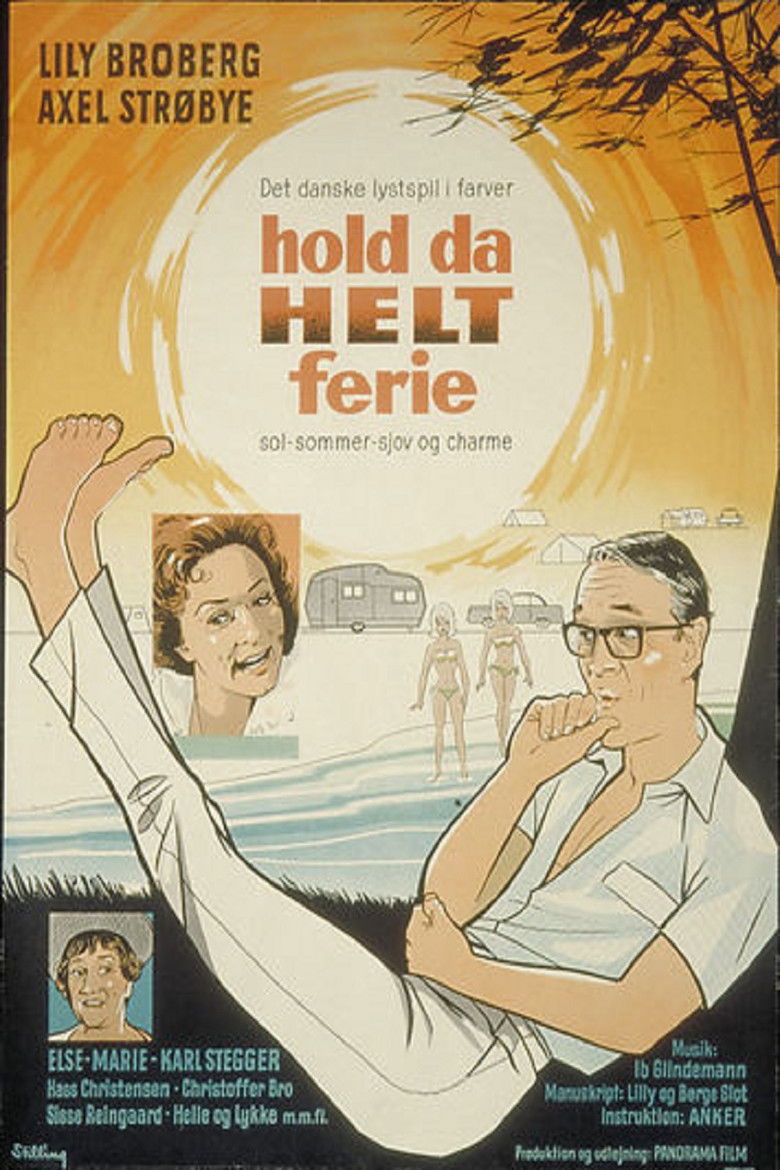
Hold da helt ferie
1965
Director
Anker Sørensen
Runtime
95 minutes
Average Rating
No ratings yetSynopsis
Søren is looking forward to a relaxing camping holiday with his wife, Marianne. But nothing goes as planned, when his two daughters and mother-in-law join them.
Where to Watch
Diversity & Representation
Overall Score
Limited
Category Breakdown
LGBTQ+ Representation
The film centers on a traditional nuclear family structure. There is no evidence of non-cisnormative identities or same-sex intimacy within the narrative.
Gender Representation
The plot utilizes a classic comedic trope where a husband's agency is challenged by female relatives. This relies on traditional gender dynamics common to the era.
Racial & Ethnic Diversity
The cast appears ethnically homogeneous, reflecting the typical demographic presentation of 1960s Danish regional comedies. No diverse casting is indicated.
Religious & Cultural Diversity
The story reinforces Western social structures and the stability of the nuclear family. It focuses on domestic holiday traditions and familial obligations.
Disability Representation
There is no information available regarding characters with visible or invisible disabilities in this production.
Strengths
- Provides a clear look at mid-century Scandinavian social realism and domestic comedy structures.
Areas for Improvement
- Lacks racial and ethnic diversity, reflecting a highly homogeneous demographic.
- Relies on traditional gender tropes rather than subverting established social hierarchies.
- Offers minimal representation for LGBTQ+ identities or non-traditional family structures.
AI Analysis
Hold da helt ferie is a mid-century domestic comedy that adheres strictly to the social hierarchies of 1965 Denmark. The narrative is built around a conventional family unit, focusing on the friction caused by domestic holiday expectations. The film lacks intersectional representation, offering a homogeneous view of society that reflects the era's standard demographic. It functions primarily as a lighthearted observation of traditional family life rather than a tool for social subversion. While the comedic tension between the male protagonist and his female relatives provides some character conflict, it stays within established gender tropes of the period.
Rate this Movie
Reviews
No reviews yet. Be the first to share your thoughts on this movie!
Use the rating form above to leave a star rating and optional review.