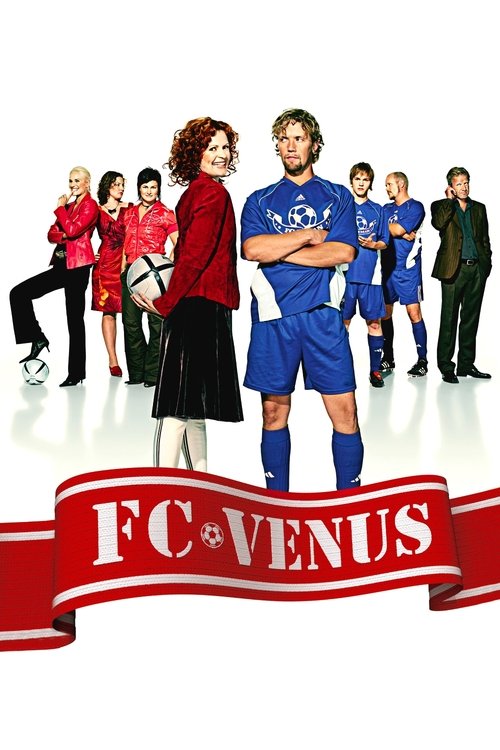
FC Venus
2005
No user ratings available yet
Representation score: 4.2 out of 10
Representation Score
Fair
2006
Director
Ute Wieland, Bruno Grass
Runtime
95 minutes
Average Rating
No ratings yetNew Showbiz Analysis
FC Venus functions primarily as a gender-focused comedy that challenges traditional domestic hierarchies. By framing the men's soccer obsession as a source of frustration, the film allows a female ensemble to seize control and challenge a male-dominated institution. However, the film's scope is limited. It relies on a traditional romantic structure and lacks broader multi-layered depth. The social setting appears homogeneous, focusing on localized German cultural clichés rather than diverse racial or ethnic perspectives. Ultimately, while the film successfully challenges traditional gender roles through its central conflict, it remains a narrow critique of sports fandom rather than a broader systemic deconstruction.
Category Breakdown
The story focuses on a traditional romantic relationship between Anna and Paul. It does not include narratives involving non-binary genders or critiques of the assumption that everyone is straight.
Women are portrayed as a collective force challenging the male-dominated soccer culture. Female characters take a leading role in driving the story from passive observers to active protagonists.
The narrative seems to center around a homogeneous social group in a small German town. There is no indication of a multi-ethnic cast or diverse racial backgrounds.
The film critiques the hyper-masculine culture of German soccer fandom. It portrays this obsession as a source of domestic friction within a specific social subculture.
The film does not mention any characters with visible or invisible disabilities.
Present on Screen
Limited or Absent
Official Synopsis
Anna is persuaded by her boyfriend Paul to move from Berlin to his home town of Imma. What the notorious soccer hater doesn't know, however, is that joining his best friend Steffen's law firm is just a pretext. In reality, Paul and his buddies are there to save the soccer club he co-founded, Eintracht Imma 95, from relegation. Anna soon realizes that the players' wives have nothing to say to their soccer junkies: Artificial turf in the bedroom, Effenberg bedding and weekends on the soccer pitch. When she finds out the real reason for the move, she mobilizes her fellow sufferers to counter-attack after a fierce bout of frustration and challenges Paul and his friends to the ultimate duel on the soccer pitch. The bet is on: women against men. If the women win, soccer is over - and Paul has to go back to Berlin with Anna. Forever. If the men win, there will be no more complaining.
2005
1993

2012

2008
2005
2017

2001
1972
No reviews yet. Be the first to share your thoughts on this movie!
Use the rating form above to leave a star rating and optional review.