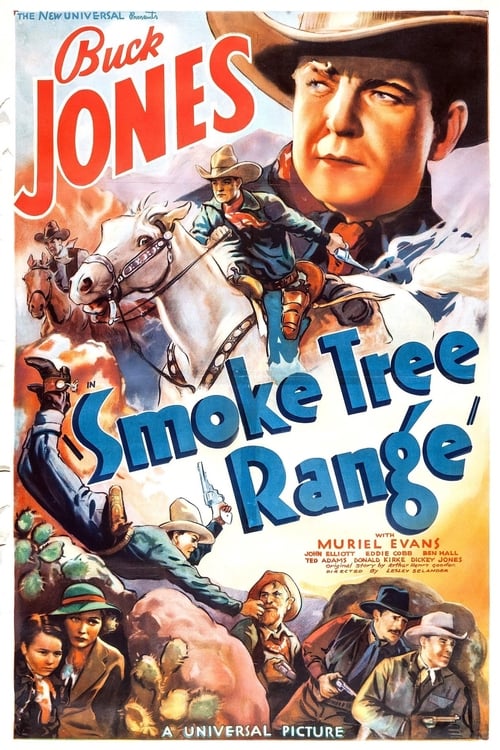
Smoke Tree Range
1937
No user ratings available yet
Representation score: 1.4 out of 10

Representation Score
Minimal
1938
PassedDirector
Ralph Staub
Runtime
58 minutes
Average Rating
No ratings yetNew Showbiz Analysis
The film opens on the vast, sun-drenched prairie, a landscape that visually promises freedom but narratively enforces a rigid hierarchy. Gene Autry, the singing cowboy, is the unmarked standard against which all other characters are measured. He is clean, competent, and morally unimpeachable, a figure whose very existence justifies the social order. The three Barton boys, rough and chaotic, represent the disorder that his presence tames. Their journey from Chicago delinquents to adopted ranchers is not a story of individual growth but of assimilation into his world. The sold meaning is clear: order is maintained by a specific type of white male hero. The camera lingers on Autry’s confident posture and his harmonica, a prop that marks him as the moral center. The boys’ initial resistance is treated as a problem to be solved, not a perspective to be heard. When they consider leaving with the villain Frank Welch, it is not because Welch offers a better life, but because they are confused by the sudden change. Gene’s solution—a phony "Mrs. Barton"—is a trick that works because the audience is primed to accept his authority. The film does not question the power dynamics of adoption or guardianship; it presents them as natural extensions of his heroism. The ending is the moral verdict. Gene and Peggy stand together, safe and united, as the threat recedes. The boys are adopted, their chaotic energy absorbed into the stable family unit. The camera loves Autry’s pristine state; he never suffers lasting damage. The gangsters are captured, their harm treated as slapstick. The film’s argument is that the West is a place of lawlessness that requires a specific type of white male hero to bring order. The last image is not one of liberation but of restoration, a return to the status quo where Autry’s values are the default.
Category Breakdown
The narrative operates within a strictly heteronormative framework where romantic and familial bonds are exclusively heterosexual. No queer identities, intimacies, or discussions appear on screen.
Gene Autry functions as the sole competence center, resolving all conflict through physical and moral authority. Peggy Shaw serves as the passive moral anchor and romantic reward, culminating in a marriage that validates his heroism.
The cast is entirely white, reflecting the unmarked racial default of the 1938 Western genre. The prairie is depicted as an empty space devoid of Indigenous presence or historical context.
The film upholds rural law, patriarchal guardianship, and meritocratic order as the ideal social structure. Gene’s adoption of the boys and marriage to Peggy reinforce stable, traditional family units over individual dissent.
No characters possess visible or narrative disabilities. Physical injury is limited to temporary slapstick violence against antagonists, serving only to highlight the hero’s superior fitness.
Present on Screen
Limited or Absent
Official Synopsis
Gene takes care of three tough kids sent west from Chicago after their father died and left them a cattle ranch. They help him catch a bunch of rustlers.
1937
1939
1939
1946
1933
1947
1943
1972
No reviews yet. Be the first to share your thoughts on this movie!
Use the rating form above to leave a star rating and optional review.