Man and the Moon
1955
No user ratings available yet
Representation score: 0.3 out of 10
Representation Score
Minimal
1956
Not RatedDirector
Frank Capra, William T. Hurtz
Runtime
57 minutes
Average Rating
No ratings yetNew Showbiz Analysis
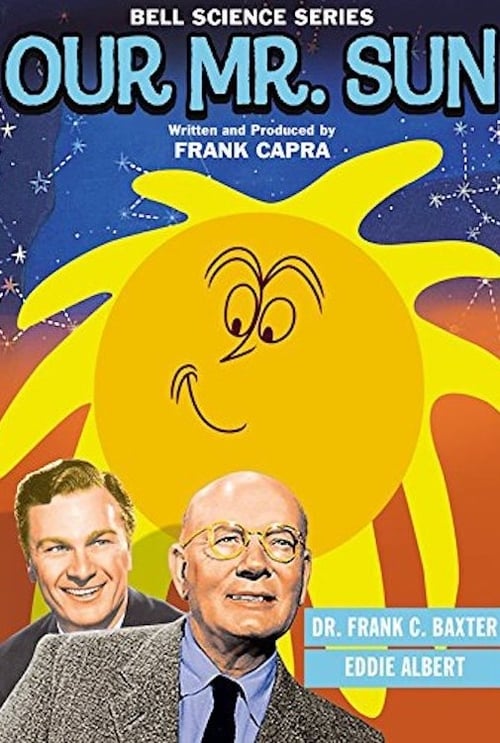
Our Mr. Sun is a mid-century educational documentary designed to make astronomy accessible to children. Because the subject matter is purely scientific, the film lacks the narrative complexity needed to address identity or social ability to act. The production reflects the institutionalized educational standards of 1956. It prioritizes the dissemination of solar facts through animation rather than exploring human experiences or systemic critiques. Ultimately, the film serves as a traditional instructional tool that maintains the cultural status quo of its era, focusing on universal physical laws rather than social representation.
Category Breakdown
The film focuses solely on solar mechanics and scientific phenomena, with no character-driven narratives or interpersonal relationships that explore sexual orientation or gender identity.
As a mid-century educational short, the film lacks human character arcs. The celestial sun serves as the subject rather than a gendered agent, reflecting the era's standard pedagogical tone.
The narrative prioritizes universal physical laws over human social dynamics. It reflects the homogeneous demographic standards typical of 1956 educational media, lacking intentional racial diversity.
The film operates within a structured, Western academic framework. It functions as a standard piece of mid-century instructional media without offering postmodernist or anti-religious critiques.
The animation does not include personified elements or characters that address physical disabilities or neurodivergence.
Present on Screen
Limited or Absent
Official Synopsis
One entry in a series of films produced to make science accessible to the masses—especially children—this film describes the sun in scientific but entertaining terms.
1955
1957
1980
2000

1955
1953
1976
1956
No reviews yet. Be the first to share your thoughts on this movie!
Use the rating form above to leave a star rating and optional review.