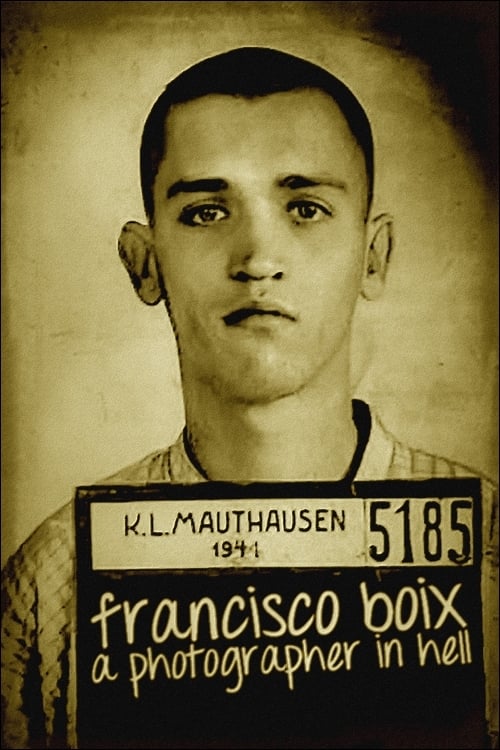
Francisco Boix: A Photographer in Hell
2000
No user ratings available yet
Representation score: 7.1 out of 10
Representation Score
Fair
2011
Director
Daniel Costelle, Isabelle Clarke
Runtime
80 minutes
Average Rating
No ratings yetNew Showbiz Analysis
This documentary prioritizes historical reconstruction over contemporary identity politics. It succeeds by deconstructing official state narratives through amateur footage and personal testimony, offering a nuanced view of survival and complicity rather than a binary hero-villain story. However, the film's scope is limited by its historical setting. The focus on the specific geopolitical conflict between France and Nazi Germany results in a lack of LGBTQ+ and racial visibility. The representation remains tied to the demographic realities of 1940s Europe. Ultimately, the work's strength lies in its subjective approach to history. By emphasizing lived experiences and the complexities of human adaptability, it provides a subtle disruption of traditional, state-sanctioned historical frameworks.
Category Breakdown
The film focuses on the historical experience of the German occupation. There is no explicit evidence of narratives centering on queer domesticity or non-traditional gender identities.
The narrative prioritizes day-to-day civilian life, which includes domestic spheres often occupied by women. However, it lacks evidence of women exercising high-level ability to act or challenging gender hierarchies.
The documentary functions as a historical reconstruction of 1940s Europe. The personal stories likely reflect the demographic homogeneity of that specific geopolitical conflict and era.
The film explores the gray zones of human behavior and situational ethics. It challenges moral absolutes by examining how citizens adapted to life under occupation.
There is no specific information regarding the portrayal of individuals with physical or neurodivergent disabilities within the provided material.
Present on Screen
Limited or Absent
Official Synopsis
June 14, 1940. The German Army marches into Paris. France is an occupied country. Through exclusive amateur footage, personal stories, and popular songs from the time, this fi lm recounts life with the enemy during the occupation, as seen by the French... and the Germans! Despite the Nazis and the troubled war times, day-to-day life in occupied France went on. People learnt to live with the rationing, the cues, the curfew... Many try to forget the hard times, mainly thanks to the movies in which big stars provide a little dream and lead a privileged life. These stars don't actually collaborate, butadapt and give the impression of normal life during the war. After all, is it necessarily shameful to shake the hand of an enemy?
2000

2022
2021
2015
1971
1993
1974

2022
No reviews yet. Be the first to share your thoughts on this movie!
Use the rating form above to leave a star rating and optional review.