
Gambling House
1950
No user ratings available yet
Representation score: 2.3 out of 10
Representation Score
Minimal
1934
PassedDirector
Rowland V. Lee
Runtime
82 minutes
Average Rating
No ratings yetNew Showbiz Analysis
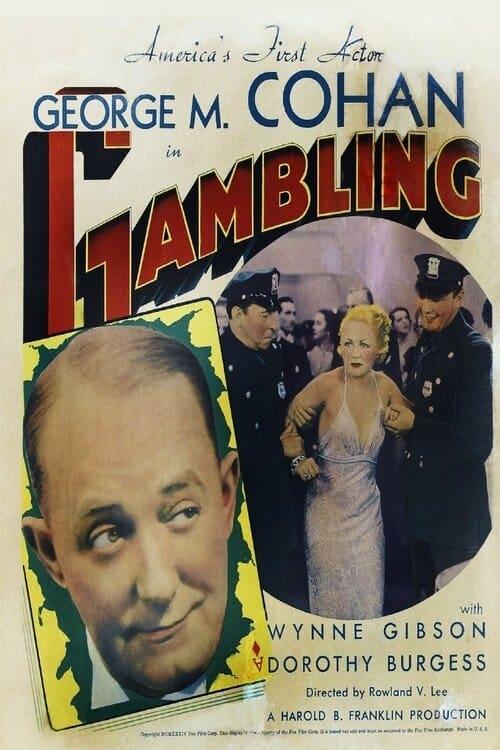
Gambling is a standard crime drama that prioritizes the moralistic frameworks of the early 1930s. The story focuses on the tension between criminal lifestyles and domestic stability, relying on established genre clichés rather than social subversion. The film's structure reinforces traditional hierarchies. While the casting of Ricardo Cortez offers a minor departure from rigid Anglo-Saxon casting norms, the narrative lacks complexity in representing diverse identities or giving characters independent ability to act. Ultimately, the film serves as a period piece that upholds existing social and domestic structures. It offers a singular moral perspective that favors traditional storytelling over disrupting social norms.
Category Breakdown
The film does not include any LGBTQ+ characters or explore non-straight relationships. Romantic relationships are limited to traditional heterosexual pairings.
Female characters primarily serve as moral anchors or catalysts for the male protagonist's journey. Their roles are defined by their relationships to men, reinforcing traditional sacrificial archetypes.
The cast is predominantly homogeneous, reflecting 1930s casting norms. However, Ricardo Cortez brings a subtle layer of ethnic presence in a leading role.
The narrative reinforces traditional Western social and moral hierarchies. It explores personal vice through consequences rather than offering a systemic critique.
There are no visible or invisible disabilities depicted. No characters have arcs defined by physical impairment or neurodivergence.
Present on Screen
Limited or Absent
Official Synopsis
The adopted daughter of New-York-City gambler, Al Draper, elopes from quarantine (key plot word) with another voyager from Europe. Later she is found murdered in a hotel room. Draper is dissatisfied with the handling of the case by the district attorney and sets out to work the case himself.
1950

1953
1931
1940
1932
1944
1937

1965
No reviews yet. Be the first to share your thoughts on this movie!
Use the rating form above to leave a star rating and optional review.