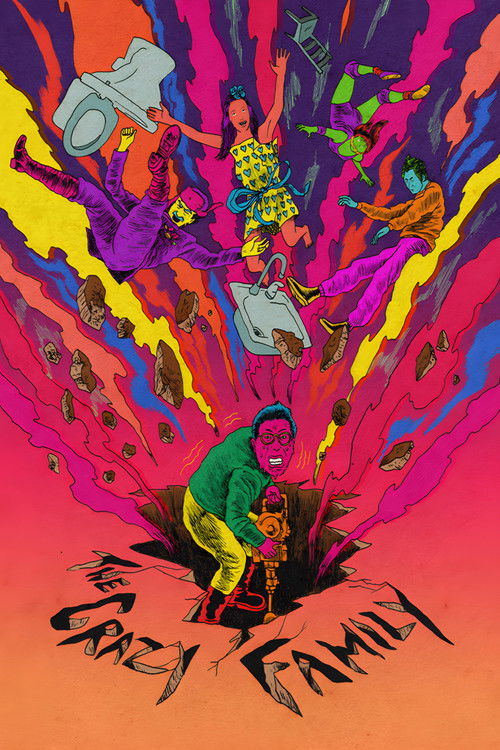
The Crazy Family
1984
No user ratings available yet
Representation score: 4.1 out of 10

Representation Score
Excellent
1993
Not RatedDirector
Jon Moritsugu
Runtime
60 minutes
Average Rating
No ratings yetNew Showbiz Analysis
Terminal USA is a film that deliberately challenges social norms and domestic stability. It replaces traditional archetypes with complex, often abrasive, characters who operate outside conventional ethics. The film's strength lies in its portrayal of complex gender and queer identities, moving away from mainstream clichés. It uses a Japanese-American setting to provide a necessary departure from the era's typical cinematic defaults. However, the representation of disability remains somewhat limited, as the narrative focuses more on the systemic consequences of illness and addiction than on the individual's experience.
Category Breakdown
The film features a male protagonist who navigates a hidden queer identity. His journey contrasts his ideal student persona with his secret romantic interests, challenging the assumption that everyone is straight or cisgender.
Female characters defy traditional domestic roles through non-conformity. The mother and sister have individualistic, morally ambiguous motivations instead of being portrayed as nurturing figures.
By centering a Japanese-American family, the film shifts from the Anglo-Saxon focus common in 1990s cinema. Ethnic identity shapes the family's social context and dysfunction.
The narrative critiques traditional institutions like the nuclear family and medical authority. These structures are shown as sites of corruption, addiction, and moral decay.
A terminally ill grandfather drives the plot, but the focus is on the family's chaotic response to his illness. The narrative emphasizes systemic consequences rather than the individual's actions.
Present on Screen
Limited or Absent
Official Synopsis
In a Japanese-American family, the mother is stealing the terminally ill grandpa's morphine, the airhead sister is having sex with the family lawyer, one brother gets perfect grades but is hiding a secret gay love of skinheads, and the other brother is a junkie. Over the course of one evening, the family falls apart due to their bizarre behaviour.
1984

1989

2001
2001
1991
2001

2019

1999
No reviews yet. Be the first to share your thoughts on this movie!
Use the rating form above to leave a star rating and optional review.