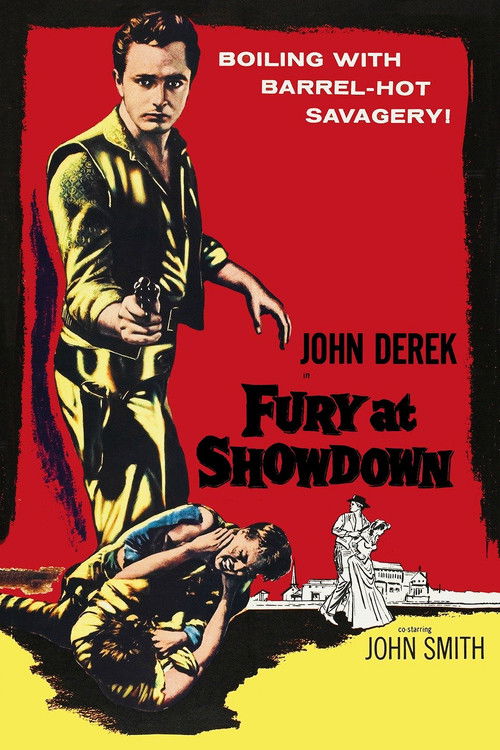
Fury at Showdown
1957
No user ratings available yet
Diversity score: 2.3 out of 10

1957
NRDirector
Gerd Oswald
Runtime
82 minutes
Average Rating
No ratings yetSynopsis
After the American Civil War, former Union Major John Garth marries pretty settler Valerie but tragedy strikes and the two spouses end up in court where they give two different conflicting accounts of their marriage.
Overall Score
Limited
Category Breakdown
LGBTQ+ Representation
The film offers no evidence of non-cisnormative identities or same-sex intimacy. It appears to adhere to the heteronormative standards typical of 1957 cinema.
Gender Representation
Valerie possesses the agency to challenge her husband's version of reality in court. However, the story likely operates within traditional mid-century gender hierarchies.
Racial & Ethnic Diversity
The post-Civil War setting and character descriptions suggest a predominantly white, Anglo-Saxon cast. There is no evidence of non-white majority representation.
Religious & Cultural Diversity
The narrative explores subjective morality through conflicting testimonies. However, it remains rooted in traditional Western institutions like marriage and the legal system.
Disability Representation
There is no documented evidence regarding the portrayal of physical, sensory, or neurodivergent disabilities within the primary character arcs.
Strengths
Areas for Improvement
AI Analysis
Valerie is a mid-century character study that uses a legalistic framework to explore interpersonal conflict. While the use of conflicting testimonies introduces moral ambiguity, the film lacks intersectional complexity. The production reflects the demographic homogeneity and social hierarchies common to the 1950s Western genre. It functions more as a domestic drama than a tool for systemic subversion. Ultimately, the film stays within established historical and social boundaries, offering little demographic disruption or progressive representation.
No reviews yet. Be the first to share your thoughts on this movie!
Use the rating form above to leave a star rating and optional review.