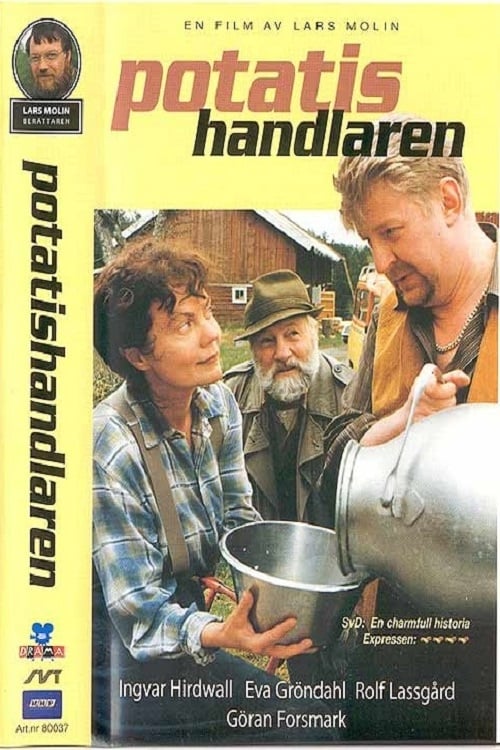
The Potato Seller
1996
No user ratings available yet
Diversity score: 3.7 out of 10

1983
Director
Lars Molin
Runtime
52 minutes
Average Rating
No ratings yetSynopsis
The film depicts a stubborn farmer who refuses to adapt to new rules that require him to leave his milk on the village common milk stool instead of his own.
Overall Score
Minimal
Category Breakdown
LGBTQ+ Representation
The film contains no discernible presence of non-heteronormative identities. The social framework remains strictly aligned with traditional 19th-century interpersonal structures.
Gender Representation
The narrative prioritizes masculine-centric hierarchies and honor-based competition between men. Women are relegated to conventional domestic and supportive roles characteristic of the era.
Racial & Ethnic Diversity
Casting reflects the demographic homogeneity of 19th-century rural Sweden. The film presents a culturally uniform peasantry consistent with historical realism.
Religious & Cultural Diversity
The story is embedded in traditional institutions like the church and established social orders. It portrays these as foundational backdrops rather than subjects of critique.
Disability Representation
There is no evidence of physical or neurodivergent disabilities playing a central role in the character arcs or plot progression.
Strengths
Areas for Improvement
AI Analysis
Midvinterduell is a period-accurate character study that prioritizes historical realism over modern intersectional representation. The film focuses on the friction between individual stubbornness and communal regulations in 19th-century Småland, which naturally limits the scope of its social diversity. The narrative is driven by masculine ego and traditional social hierarchies. While this provides a localized look at agrarian life, it reinforces existing power dynamics rather than challenging them. Ultimately, the film functions as a study of tradition. It lacks the subversive elements or diverse character compositions found in more progressive contemporary works.
No reviews yet. Be the first to share your thoughts on this movie!
Use the rating form above to leave a star rating and optional review.