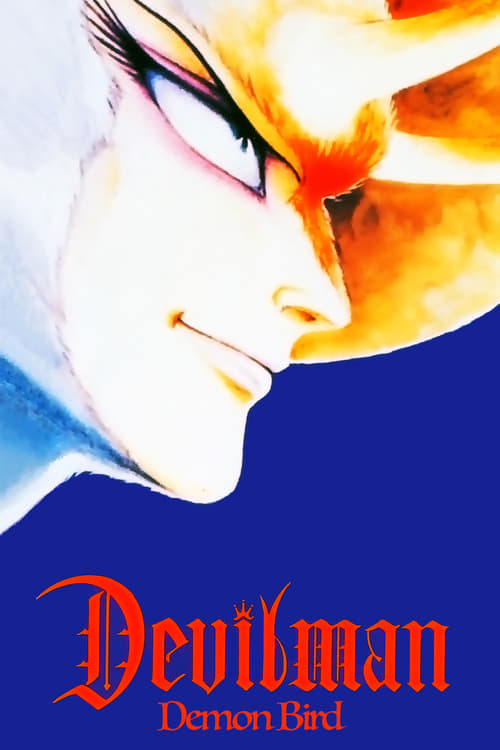
Devilman - Volume 2: Demon Bird
1990
No user ratings available yet
Representation score: 5.1 out of 10

Representation Score
Fair
1987
TV-MADirector
Umanosuke Iida
Runtime
51 minutes
Average Rating
No ratings yetNew Showbiz Analysis
Devilman - Volume 1: The Birth is a visceral dark fantasy that prioritizes themes of social disintegration over diverse character representation. While it lacks breadth in gender, race, and LGBTQ+ identities, it offers a sophisticated critique of societal structures. The film uses the conflict between humans and demons to explore the fragility of the social contract. However, the work remains largely conventional in its character archetypes and demographic makeup, focusing on a homogeneous setting and traditional gender roles.
Category Breakdown
The film does not include explicit LGBTQ+ characters or non-cisgender identities. The story focuses mainly on the protagonist's biological and metaphysical changes.
Gender roles remain traditional, with Miki Makimura serving as a supportive moral figure. The story explores masculinity through physical violence without challenging conventional stereotypes.
Set in a culturally homogeneous Tokyo, the cast is mostly Japanese. The narrative focuses on the biological divide between humans and demons rather than exploring ethnic diversity.
The film stands out by breaking down social order and institutional stability. It shows the collapse of civil authority and the fragility of traditional social contracts during mass hysteria.
There are no prominent depictions of visible or invisible disabilities. Physical transformations are presented as supernatural horror rather than exploring neurodivergence or physical impairments.
Present on Screen
Limited or Absent
Official Synopsis
Akira Fudo is just a normal kid in Tokyo, until an old friend of his, Ryo, shows up and turns his world upside down. An upcoming war of demons on humanity is waiting in the wings, however, the only way for a human to fight a demon is with their power. To save the world, Akira and Ryo risk a dangerous ceremony in an attempt to create humanity's only hope: the powerful Devilman.
1990
1988

2004
1989
2000

2025
1993
2021
No reviews yet. Be the first to share your thoughts on this movie!
Use the rating form above to leave a star rating and optional review.