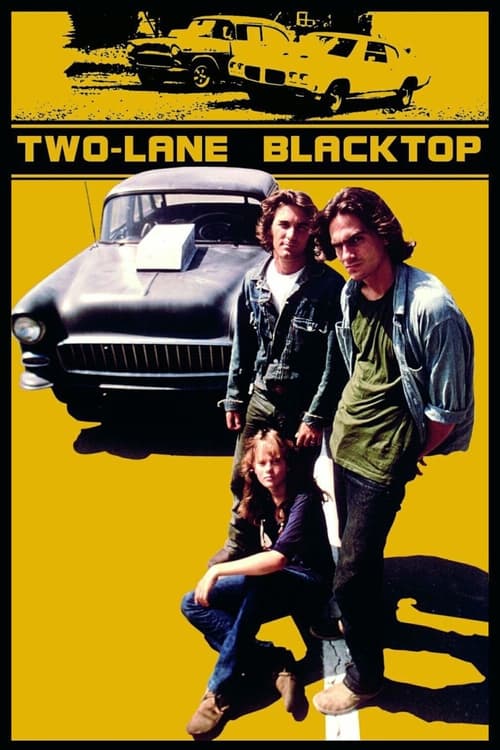
Two-Lane Blacktop
1971
No user ratings available yet
Representation score: 0.9 out of 10

Representation Score
Minimal
1971
RDirector
Richard C. Sarafian
Runtime
105 minutes
Average Rating
No ratings yetNew Showbiz Analysis
Vanishing Point is a kinetic exploration of existential alienation that prioritizes a singular, high-speed journey over social diversity. While it excels in its thematic deconstruction of authority and anti-establishment sentiments, it remains narrow in its demographic scope. The film's strength lies in its sophisticated critique of Western institutionalism and state authority. However, it fails to provide meaningful representation across most identity-based categories, adhering to traditional masculine archetypes and homogeneous casting.
Category Breakdown
The film does not include any queer narratives or non-cisgender identities. The character dynamics revolve around a single, heterosexual male experience.
Gender roles are traditional, with the male protagonist having the central role of autonomy. Female characters are peripheral, supporting the male pursuit of freedom.
The cast is predominantly white, focusing on a white male protagonist in an Anglo-centric setting. The film does not use racial or ethnic diversity as a narrative tool.
The film provides a progressive critique of Western institutions and state authority. It portrays the protagonist's defiance of social norms as a quest for existential freedom.
There is no significant focus on visible or invisible disabilities within the main narrative.
Present on Screen
Limited or Absent
Official Synopsis
Kowalski works for a car delivery service, and takes delivery of a 1970 Dodge Challenger to drive from Colorado to San Francisco. Shortly after pickup, he takes a bet to get the car there in less than 15 hours.
1971

1971

1966

1974
1977

1974
2007
1968
No reviews yet. Be the first to share your thoughts on this movie!
Use the rating form above to leave a star rating and optional review.