Jekyll + Hyde
2006
No user ratings available yet
Representation score: 4.6 out of 10
Representation Score
Limited
1998
Director
Billy Chung Siu-Hung
Runtime
94 minutes
Average Rating
No ratings yetNew Showbiz Analysis
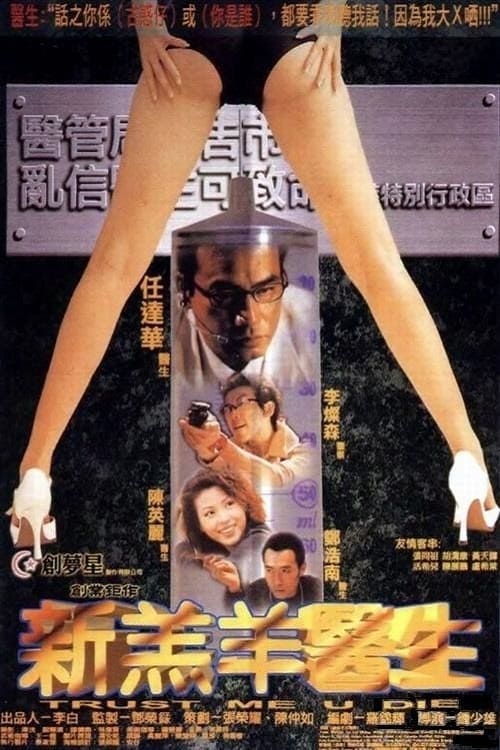
Trust Me U Die is a genre-driven thriller that emphasizes visceral horror over socially progressive themes. The narrative heavily relies on traditional clichés, especially concerning gender and disability, which reinforce existing social hierarchies rather than challenging them. While the film offers a localized Hong Kong perspective, it lacks intentionality in representing diverse identities. The plot uses medical 'deficits' as mere devices for superhuman transformation, limiting the depth of its character development.
Category Breakdown
The film centers around conflicts based on the assumption that everyone is straight or cisgender. It doesn't include characters with non-traditional gender identities or stories that question typical heterosexual relationships.
The film reinforces traditional gender roles, positioning the female protagonist in a highly vulnerable situation. Her portrayal emphasizes submission rather than empowering her to take control of her own story.
The cast is primarily made up of East Asian actors, reflecting the film's Hong Kong origins. It avoids casting actors based solely on Western standards but does not extensively employ color-blind casting.
The storyline delves into moral relativism through the lens of black market criminal activity. However, it fails to provide a comprehensive critique of systemic issues, focusing instead on individual obsessions and pathologies.
Disabilities, both cognitive and physical, are used as plot devices to introduce a 'super steroid.' This portrayal treats disabilities as deficits to be overcome through horrific means of enhancement.
Present on Screen
Limited or Absent
Official Synopsis
In England, Dr. Greg Fong invents a super steroid (SS160) which can cure virtually all illnesses and disorders (including impotence and idiocy) and generally makes someone superhuman. But his obsession with the super drug, begins making him mentally unbalanced. After the death of his co-worker, Fong returns to Hong Kong with his new wonder drug and begins working with old friend Dr. Mike Chow (Mark Cheng) Mike (who sells black market kidneys) then drugs and rapes his Fong's girlfriend Vivian who falls for him in return (!). Fong takes the affair as good reason to do a bit of human medical tests, and begins doing secret medical experiments on Dr. Chow, as well as a host of other patients, notably including policeman Chan Sum who begins turning superhuman.
2006
1960

2003
1963
1989
2009
2019

2011
No reviews yet. Be the first to share your thoughts on this movie!
Use the rating form above to leave a star rating and optional review.