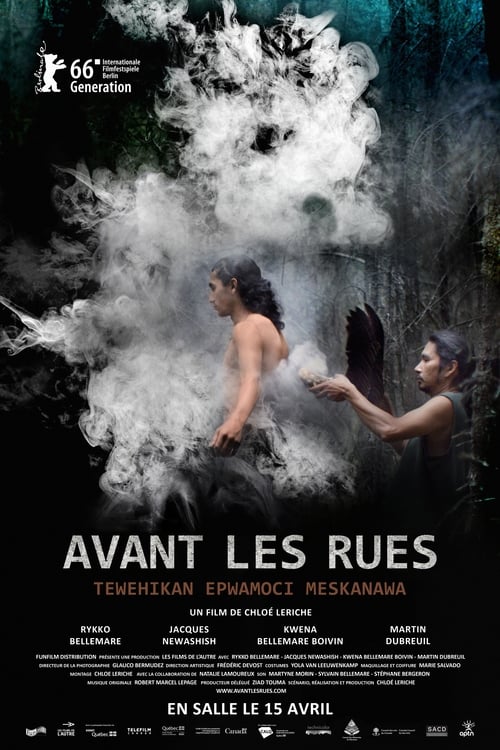
Before the Streets
2016
No user ratings available yet
Representation score: 6.0 out of 10

Representation Score
Excellent
2016
Director
Fábio Baldo, Sergio Andrade
Runtime
85 minutes
Average Rating
No ratings yetNew Showbiz Analysis
Time Was Endless is a sophisticated piece of storytelling that explores complex identities. It successfully moves beyond surface-level inclusion by centering a protagonist who navigates a multifaceted identity between their Tikuna roots and their emerging sexuality. The film's strength lies in its refusal to treat indigenous or queer identities as static. Instead, it presents them as evolving forces clashing with the systemic pressures of urban migration and capitalism. While the focus remains heavily on the male protagonist's internal journey, the film provides a grounded look at the socioeconomic realities of the urban periphery through the supporting characters.
Category Breakdown
The film focuses on a protagonist discovering their two-spirited sexuality. It examines how queer identity intersects with urban anonymity and the tension between personal growth and traditional tribal rituals.
Gender roles are shown through the protagonist's sister managing a household under precarious conditions. While the male protagonist drives the internal storyline, female characters play crucial roles in survival.
The narrative centers on a member of the Tikuna community. It avoids a Western perspective, instead portraying the indigenous protagonist as an active agent navigating the pressures of the Manaus metropolis.
The story critiques the friction between indigenous traditions and urban capitalism. It highlights the 'limbo' between tribal rituals and modern systems, emphasizing the alienation faced by displaced populations.
A sick child in the household introduces themes of vulnerability and the burden of care. This element grounds the narrative in the realistic socioeconomic precarity of underrepresented communities.
Present on Screen
Limited or Absent
Official Synopsis
In search of a new life, Anderson has left his Tikuna community in the Amazon forest for the bustling metropolis of Manaus. There he lives on the outskirts of the city with his sister and her sick child in a barren single room, and supports them through working various jobs. The environment is far from welcoming, but Anderson is driven by a burgeoning awareness of his two-spirited sexuality, which he feels can only be realized in the anonymity of the city. Anderson finds himself in limbo, questioning and rejecting certain tribal rituals, even as he fiercely defends his community and seeks to find peace with his identity.
2016

2011

2019

2007

2005

2017

2016

2013
No reviews yet. Be the first to share your thoughts on this movie!
Use the rating form above to leave a star rating and optional review.