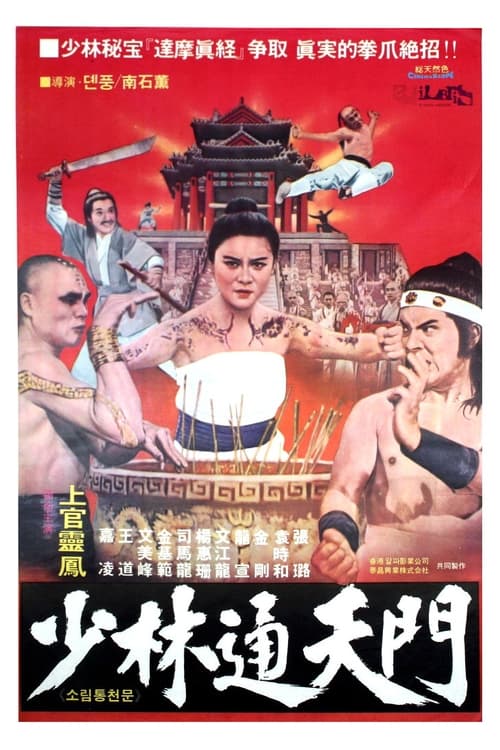
Warriors of the Sacred Temple
1977
No user ratings available yet
Representation score: 2.8 out of 10
Representation Score
Fair
1977
RDirector
Hou Cheng
Runtime
101 minutes
Average Rating
No ratings yetNew Showbiz Analysis
Fight for Survival stands out in the martial arts genre by centering its narrative on a female lead. By granting her physical mastery and the ability to act to recover stolen scripts, the film disrupts the male-dominated expectations typical of 1970s kung fu cinema. However, the film remains a traditional genre piece. It adheres to established martial arts clichés and focuses on the preservation of institutional sanctity rather than social critique. The cultural perspective is specific and homogeneous, lacking the multi-layered complexity found in modern cinema. While the film succeeds in challenging gender hierarchies, it lacks diversity in other areas, including LGBTQ+ themes and disability representation, resulting in a moderate overall score.
Category Breakdown
The film does not include any LGBTQ+ themes or same-sex intimacy. It centers on a traditional storyline focused on recovering sacred texts, which does not engage with queer themes.
A female protagonist drives the plot, challenging traditional hierarchies. She plays a significant role in driving the story through her mastery of the 18 forms of Shaolin kung fu.
The cast is ethnically homogeneous, reflecting the Hong Kong film industry of its era. It serves as a culturally specific representation of Chinese martial traditions.
The story is rooted in Eastern values regarding the protection of sacred knowledge. It uses the Shaolin temple as a moral and structural foundation.
There is no discernible evidence regarding the portrayal of physical or neurodivergent disabilities within the narrative.
Present on Screen
Limited or Absent
Official Synopsis
After the sacred scripts of Tammo are stolen from Shaolin, a young girl is taught 18 forms of Shaolin kung fu to enable her to venture outside the temple and recover all of the volumes.
1977
1976
1977
1982
1983

1976
1974
1978
No reviews yet. Be the first to share your thoughts on this movie!
Use the rating form above to leave a star rating and optional review.