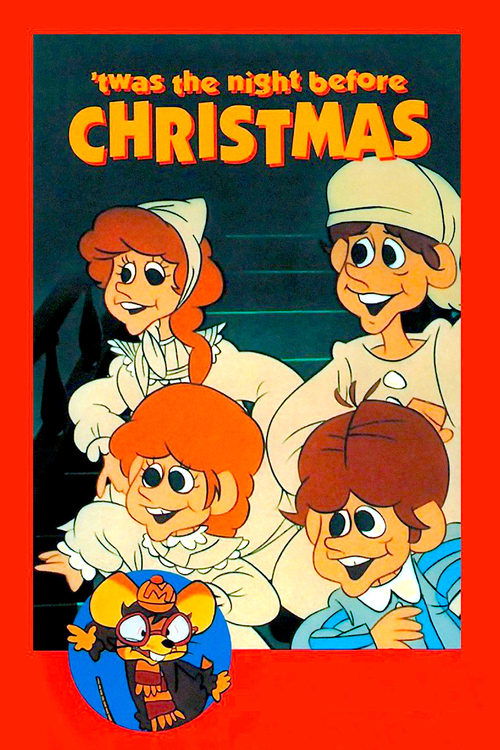
'Twas the Night Before Christmas
1974
No user ratings available yet
Representation score: 0.4 out of 10

Representation Score
Minimal
1976
TV-GDirector
Jules Bass, Arthur Rankin, Jr.
Runtime
24 minutes
Average Rating
No ratings yetNew Showbiz Analysis
The film follows a conventional narrative structure centered around a single male protagonist, Aaron, who faces institutional authority. The conflict revolves around safeguarding artisanal property from Roman soldiers, focusing on a specific historical struggle. While the historical setting hints at a diverse Mediterranean region, the production does not provide concrete evidence of intentional racial or ethnic representation. The storytelling remains confined within the boundaries of mid-1970s religious animation, upholding established moral frameworks. Overall, the absence of complex social layers or subversion of social hierarchies leads to a low diversity score. The film adheres to traditional, conservative archetypes without delving into broader social identities.
Category Breakdown
The film does not include any LGBTQ+ characters or non-cisgender identities. It uses traditional character types typical of the genre.
Aaron, the male protagonist, plays a central role in the story. The narrative focuses on his actions and responsibilities towards male soldiers, providing little room for female characters to take center stage.
The Roman-era setting suggests a diverse Mediterranean and Middle Eastern population. However, there is no specific indication of intentional ethnic blending or diverse casting.
The story is grounded in traditional Western religious themes, emphasizing Christian morality and the protection of sacred objects. It does not explore secular or diverse viewpoints.
There is no mention of characters with physical or invisible disabilities. The plot centers on external conflicts rather than addressing neurodiversity.
Present on Screen
Limited or Absent
Official Synopsis
Aaron, the drummer boy, struggles to protect a bellmaker's great silver bells from seizure by Roman soldiers
1974

1957
1978

1976
1967

1987

1981
1985
No reviews yet. Be the first to share your thoughts on this movie!
Use the rating form above to leave a star rating and optional review.