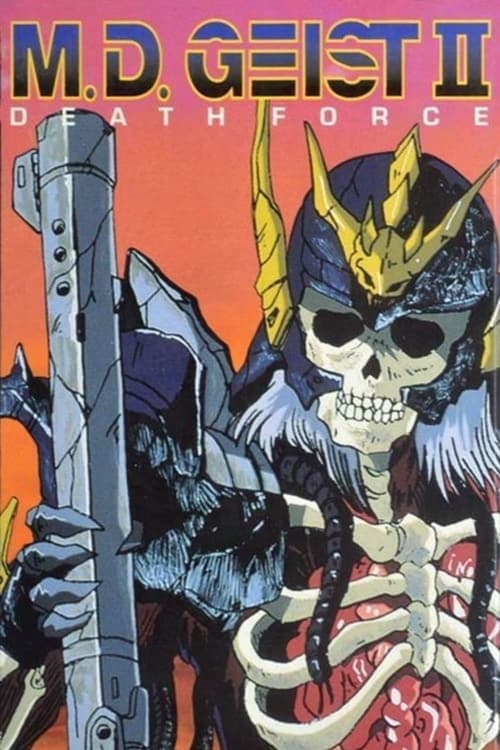
M.D. Geist II: Death Force
1996
No user ratings available yet
Representation score: 3.2 out of 10
Representation Score
Fair
1986
Not RatedDirector
Hayato Ikeda, Koichi Ohata
Runtime
45 minutes
Average Rating
No ratings yetNew Showbiz Analysis
M.D. Geist is a quintessential 1980s OVA that prioritizes stylistic nihilism and technical spectacle. It deconstructs traditional morality and the concept of the state, offering a sophisticated critique of centralized power and capitalist warfare. However, the film remains deeply rooted in the era's limitations regarding identity. It lacks meaningful representation for LGBTQ+ individuals and relies on hyper-masculine archetypes that sideline women to the periphery of the action. While the film offers a postmodern look at individual ability to act, its approach to neurodivergence is reductive, treating biological 'imperfections' merely as plot devices for conflict.
Category Breakdown
The film does not include any LGBTQ+ characters or explore non-straight identities. The story revolves around mechanical and martial conflicts in a dystopian world.
The film emphasizes hyper-masculinity, focusing on a protagonist defined by combat skills. Female characters are given secondary roles that support the male-driven action.
The cast is mainly East Asian, reflecting the production's cultural roots. It avoids Western-style whitewashing but does not seek multi-ethnic or diverse casting.
The story critiques Western-style institutions and the military-industrial complex. It replaces traditional patriotism with a focus on survivalism and moral relativism in a decaying world.
Disability is portrayed through techno-biological defects, such as the homicidal insanity of engineered units. These are treated as systemic malfunctions rather than nuanced lived experiences.
Present on Screen
Limited or Absent
Official Synopsis
Geist (the main character) is MD-02, a Most Dangerous Soldier, genetically engineered to function as a killing machine, but every one of the MDS units went homicidally insane. As a result Geist was placed in suspended animation in a stasis pod orbiting the planet Jerra until it crashed several years later, awakening him and bringing him into another war on the planet.
1996
1985
1986
2006
1990

1995
1990

1987
No reviews yet. Be the first to share your thoughts on this movie!
Use the rating form above to leave a star rating and optional review.