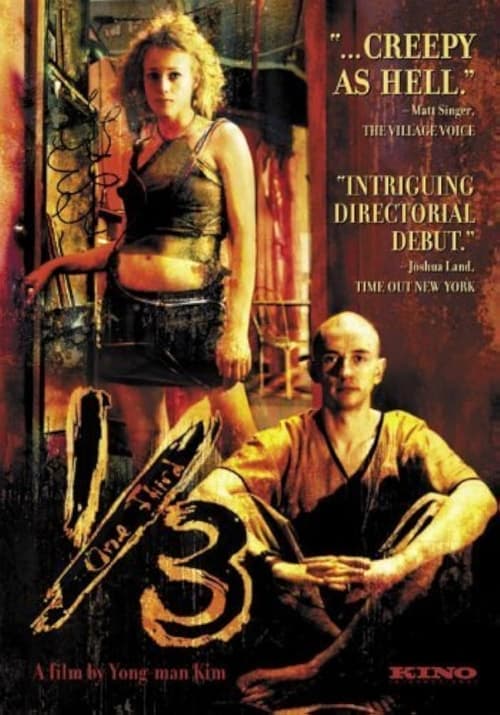
One-Third
2006
No user ratings available yet
Representation score: 8.5 out of 10

Representation Score
Excellent
2003
Not RatedDirector
Im Sang-soo
Runtime
106 minutes
Average Rating
No ratings yetNew Showbiz Analysis
Im Sang-soo’s drama deconstructs the South Korean bourgeois social structure through a female perspective. By prioritizing individual subjectivity over domestic stability, the film challenges the moral absolutism often found in traditional narratives. The film excels in its subversion of gender hierarchies and its critique of institutional hypocrisy. It moves away from idealized portrayals of wealth, presenting the professional class as emotionally hollow. However, the film remains limited by its lack of representation for LGBTQ+ identities, non-cisgender characters, and disabilities. It focuses primarily on class and gendered autonomy within a specific social context.
Category Breakdown
The film does not feature any primary LGBTQ+ characters or non-cisgender identities. However, it challenges traditional marital ideals by emphasizing sexual autonomy.
The female protagonist plays a significant role in driving the story, challenging the 'dutiful wife' stereotype by focusing on her pursuit of personal desires.
The film is set among the Seoul professional class and is ethnically homogeneous. It explores specific domestic cultural nuances rather than multicultural representation.
The film critiques Westernized capitalism and the traditional family unit. It portrays upper-middle-class prestige as a facade for moral decay and emotional isolation.
The film does not depict physical or neurodivergent disabilities. Its focus is on psychological and social dynamics.
Present on Screen
Limited or Absent
Official Synopsis
A woman, married and with a child but becoming increasingly distant from her husband who is already cheating on her, reluctantly enters a secret relationship with her neighbor, a teenage boy.
2006

2007

2015

2010

2020

2007
2012

2002
No reviews yet. Be the first to share your thoughts on this movie!
Use the rating form above to leave a star rating and optional review.