
The Best Movie
2008
No user ratings available yet
Diversity score: 2.8 out of 10
1977
Director
Georgi Shchukin, Boris Bushmelev, Anatoli Markelov
Runtime
75 minutes
Average Rating
No ratings yetSynopsis
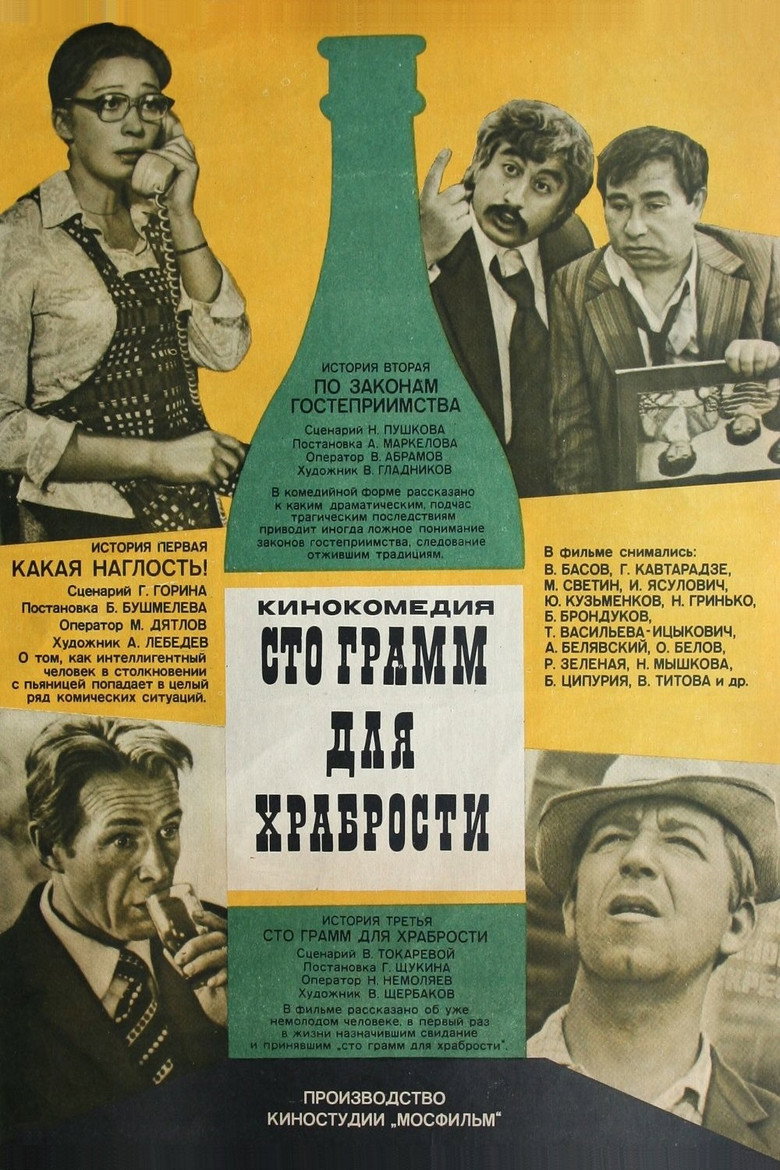
A satirical comedy of three novellas ("What an a impudence!", "By the laws of hospitality", "One hundred grams for bravery"), united by the common theme of drunkenness and alcoholism: the first one about an exemplary citizen who met an avid drunkard on the way to work, the second one about an incident at a party that occurred through the fault of alcohol, and the third one about a shy man before the first date decides to drink "hundred grams" for courage.
Overall Score
Limited
Category Breakdown
LGBTQ+ Representation
The film lacks any evidence of non-cisnormative identities or queer narratives. Its focus on communal drinking suggests a narrative centered on traditional social interactions typical of the era.
Gender Representation
The satire likely reinforces traditional gender hierarchies through masculine social rituals. There is little evidence of female agency or the subversion of patriarchal structures within these vignettes.
Racial & Ethnic Diversity
The production reflects a likely homogeneous social environment. It focuses on localized social archetypes common to Soviet satirical comedies of the late 1970s.
Religious & Cultural Diversity
The film engages with communal social norms through its critique of alcoholism. It emphasizes traditional hospitality rather than deconstructing broader institutional or Western frameworks.
Disability Representation
There is no evidence of characters with visible or invisible disabilities included in the narrative.
Strengths
Areas for Improvement
AI Analysis
100 grams for Bravery is a Soviet-era satirical comedy that uses three vignettes to examine the social phenomenon of alcoholism. The film's structure is deeply rooted in the specific socio-political framework of 1977, focusing on communal behaviors and traditional social rituals. The narrative lacks intersectional complexity, as it centers on masculine-coded social interactions and localized archetypes. This results in a narrow representation of identity that aligns with the era's systemic social constraints. While the film offers a critique of social behavior through satire, it does not actively subvert identity hierarchies or provide visibility for marginalized groups.
2008

1972

2017

1999

1999
1958

1981
2004
2004
1979

2014
1946
No reviews yet. Be the first to share your thoughts on this movie!
Use the rating form above to leave a star rating and optional review.