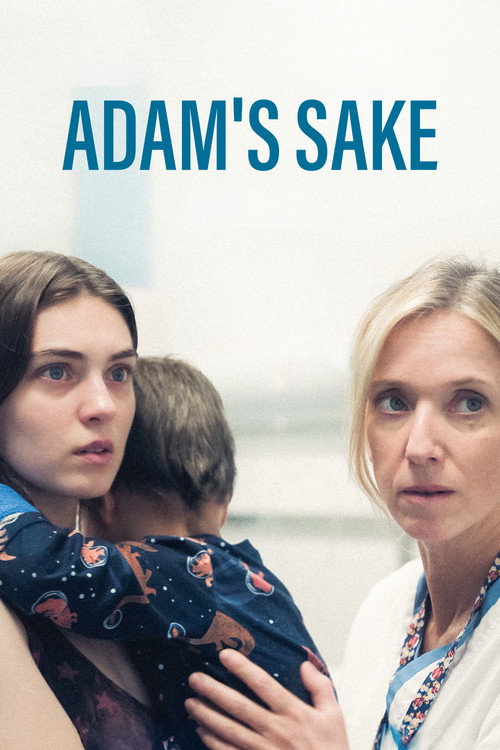
Adam's Sake
2025
No user ratings available yet
Representation score: 8.6 out of 10
Representation Score
Fair
2026
Director
Rémi Bassaler
Average Rating
No ratings yetNew Showbiz Analysis
The film opens on the threshold of a suburban clinic, where the door serves as both a literal and symbolic barrier to care. Judith, a retiring doctor, and Aïda, an undocumented pregnant woman, are locked in a single night of triage that exposes the rot in the French healthcare system. The sold meaning is clear: the state has abandoned its citizens, and only individual moral courage can bridge the gap. The camera lingers on the exhaustion in Judith’s eyes and the vulnerability in Aïda’s posture, framing their bond as a quiet rebellion against bureaucratic indifference. The argument is that institutional failure is a moral crisis, not just a logistical one. Judith’s decision to stay is not merely professional but existential, a final act of service that defines her legacy. The film’s internal logic is tight: the system is broken, so the individual must compensate. There is no satire here, only a grim, humanist plea for empathy in a depersonalized world. The ending, implied by the title, suggests that this one act of care is both a victory and a surrender, as Judith closes her practice for good. In the context of 2026 French cinema, the film stands as a stark, intimate critique of social decay. It does not offer political solutions but rather a moral one: that the doctor’s bedside is the last place where humanity survives. The last image, likely of Judith alone in her empty office, reinforces the idea that the system is hollow, and only personal sacrifice remains. It is a film that trusts the audience to recognize the weight of a single, unbroken night.
Category Breakdown
No queer characters or same-sex intimacy appear in the verified cast or synopsis. The narrative focuses entirely on the professional and maternal stakes between two women.
Women hold the narrative center: Judith as the competent physician and Aïda as the pregnant patient. The plot hinges on their shared labor and moral weight, with male cast members relegated to background or supporting roles.
Aïda, played by Luàna Bajrami, is a non-white character central to the plot. Her presence highlights the intersection of race, migration, and access to care within the French suburban setting.
The film critiques the failing healthcare system, treating institutional neglect as the primary antagonist. It frames state failure as a moral crisis, positioning the doctor’s personal sacrifice as the only viable response to systemic collapse.
No characters with physical, sensory, or cognitive disabilities are named in the cast or synopsis. The narrative focuses on pregnancy and medical neglect rather than chronic impairment.
Present on Screen
Limited or Absent
Official Synopsis
On the eve of her retirement, Judith, a suburban doctor, opens her practice door to Aïda — eight months pregnant and having fallen out of the medical care system. Confronted with a healthcare system pushed to the breaking point, Judith agrees to take the young woman in, embarking on a night that will put all her convictions as a healthcare professional to the test.
2025
2017

2025

2017

2025
2021
2018

2020
No reviews yet. Be the first to share your thoughts on this movie!
Use the rating form above to leave a star rating and optional review.