The Ghost Monster
1970
No user ratings available yet
Representation score: 4.0 out of 10
Representation Score
Minimal
1975
TV-Y7Director
Ralph Bakshi
Runtime
7 minutes
Average Rating
No ratings yetNew Showbiz Analysis
The film follows a traditional hero-versus-villain structure that emphasizes genre clichés over identity-focused storytelling. Despite the director's reputation for challenging animation norms, the plot centers on a restorative arc where the established social order is restored. Because the characters lack specific identity markers, the film remains a typical, formulaic piece focused on superhero archetypes and physical transformations.
Category Breakdown
The film does not explicitly address LGBTQ+ identities or gender non-conformity. There is no indication of characters being coded as queer.
Gender is not specified for the main characters or antagonists. Authority roles like the Mayor hint at traditional hierarchies, but the satirical tone may challenge these norms.
The story lacks racial diversity, with no evidence of non-white casting. The setting of Good Haven is portrayed as a generic, homogeneous community.
The story transforms prominent citizens into monsters, critiquing social stability. However, the ending restores the original social order, limiting the narrative's progressive impact.
There is no evidence of characters dealing with physical or neurodivergent conditions. The transformation mechanic serves as a plot device without exploring disability.
Present on Screen
Limited or Absent
Official Synopsis
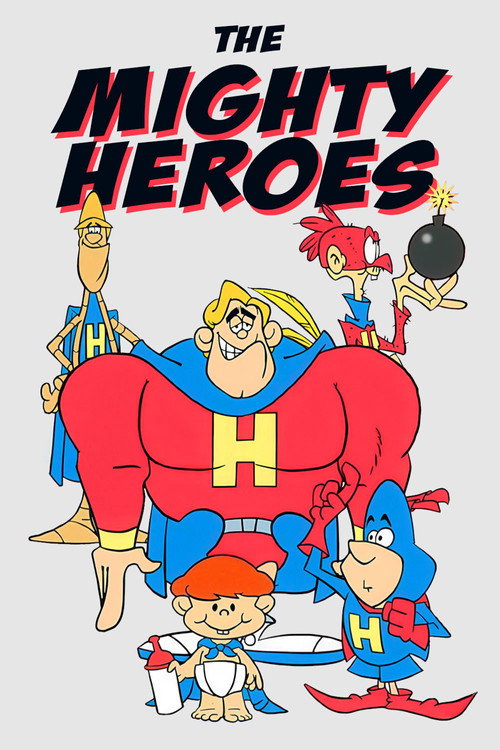
The Monsterizer and his gang of monsters kidnap prominent citizens of Good Haven, including the Mayor and Police Chief. They are then transformed into monsters by a device, creating more lackeys for the Monsterizer. The Mighty Heroes respond to a call for help. They attempt to reason with the Mayor and Police Chief, but instead get captured. The heroes are put into the Monsterizer's machine, with Rope Man used to tie them up. The heroes can't escape without snapping Rope Man in two. But Diaper Man uses his milk bottle to prevent the Monsterizer from activating the device. That gives the heroes enough time to escape. They eventually overpower the Monsterizer and change the Mayor and Police Chief into their old selves.
1970
1988
1975
1963
2014
1966
1999
1969
No reviews yet. Be the first to share your thoughts on this movie!
Use the rating form above to leave a star rating and optional review.