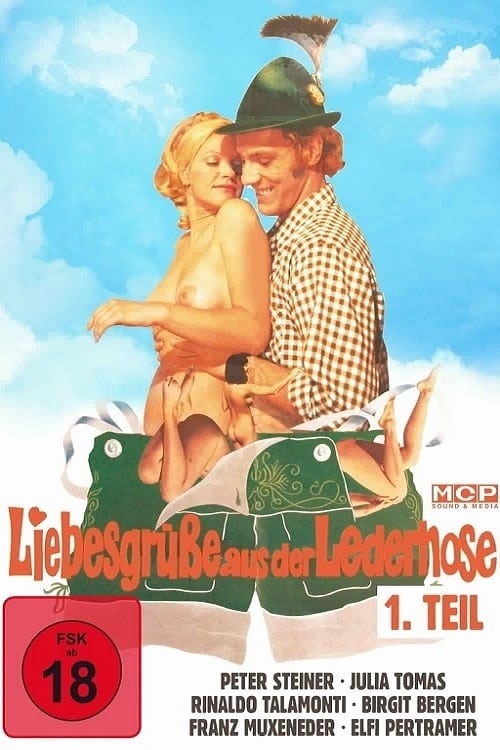
Liebesgrüße aus der Lederhose
1973
No user ratings available yet
Representation score: 1.3 out of 10
Representation Score
Minimal
1974
Director
Franz Marischka
Runtime
91 minutes
Average Rating
No ratings yetNew Showbiz Analysis
This sequel functions as a traditional regional comedy that upholds established social hierarchies. The narrative relies on conventional archetypes and a mono-ethnic, localized Bavarian setting. Representation is limited, emphasizing regional homogeneity and traditional gender roles. The focus remains on the comedic interactions of male protagonists within a culturally specific framework. Ultimately, the film maintains rather than challenges traditional social norms, offering little diversity in terms of identity or perspective.
Category Breakdown
The film focuses solely on heterosexual relationships and does not include any LGBTQ+ characters or narratives.
The story centers around two male friends, with female characters serving mainly as secondary catalysts rather than as independent drivers of the plot.
The film highlights a Bavarian farm setting with a predominantly mono-ethnic German cast, lacking diverse racial and ethnic representation.
The movie celebrates traditional rural life and customs, reinforcing the stability of established social orders and regional institutions.
There are no characters with physical or invisible disabilities mentioned, nor is there any representation of neurodivergence.
Present on Screen
Limited or Absent
Official Synopsis
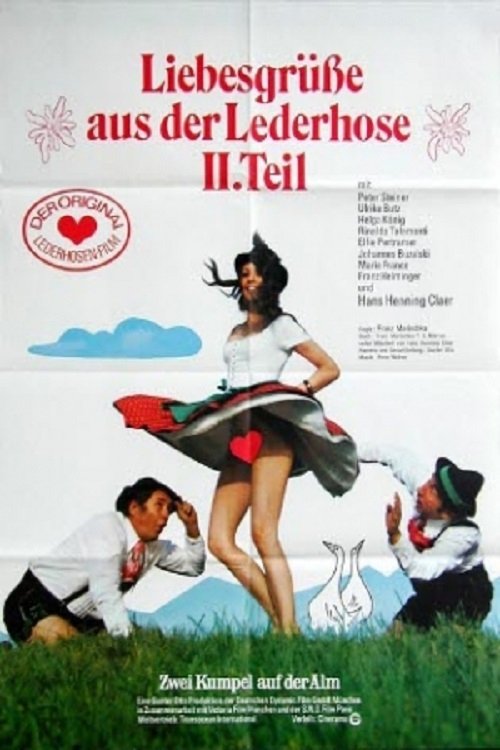
A sequel directed again by Franz Marischka. The two Ruhrpott buddies Jupp and Erwin can't quite agree on where to spend their vacation. In the end, they end up in Bavaria to spend their vacation on a farm. To their delight, they discover that the village is a hotbed of activity. This is not least thanks to the landlord Sepp, who goes out of his way to make his female vacation guests happy.
1973

1979
1980
1969
1978
1978
1977
1973
No reviews yet. Be the first to share your thoughts on this movie!
Use the rating form above to leave a star rating and optional review.