Flying Leathernecks
1951
No user ratings available yet
Representation score: 0.2 out of 10
Representation Score
Minimal
1958
NRDirector
Dick Powell
Runtime
108 minutes
Average Rating
No ratings yetNew Showbiz Analysis
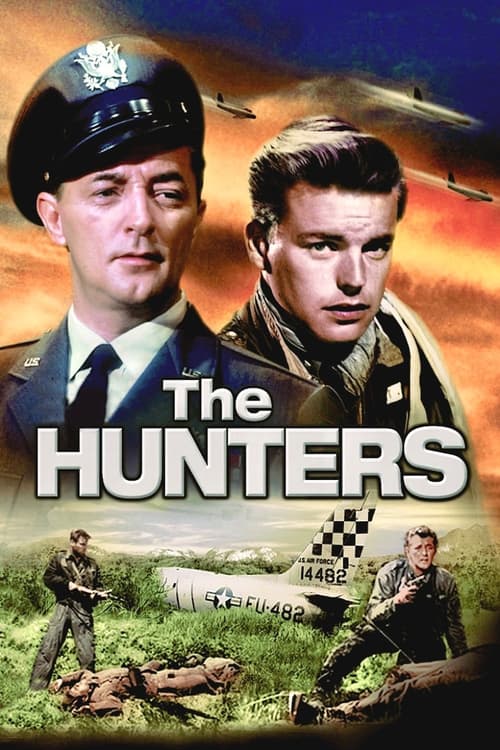
The Hunters is a classic mid-century military drama that reinforces traditional hierarchies and gender roles. The narrative focuses on masculine competence and conventional romantic conflicts, leaving little room for diverse perspectives. Gender and racial representation are limited by the era's standards, with a homogeneous group of American pilots prioritizing professional duty and established social structures over diverse viewpoints. The film adheres to conventional clichés of leadership and patriotism without attempting to challenge or deconstruct Western values.
Category Breakdown
The film is centered around straight relationships, with no representation of LGBTQ+ individuals or non-cisgender identities.
Male pilots play a central role in driving the story, while female characters primarily serve as emotional catalysts for male protagonists.
The cast reflects the demographic homogeneity typical of 1950s Hollywood, with no significant non-white characters.
The story emphasizes professional duty and the established social order of the Cold War era, focusing on traditional Western institutions.
The film does not depict any characters with visible or invisible disabilities, instead highlighting physical peak performance required for combat aviation.
Present on Screen
Limited or Absent
Official Synopsis
With its electrifying flight sequences and high-powered cast, The Hunters is a mesmerizing film based on the best-selling novel by veteran fighter pilot James Salter. Set during the height of the Korean War, the story centers on Major Cleve Saville (Robert Mitchum), a master of the newly operational F-86 Sabre fighter jets. But adept as he is at flying, Saville¹s personal life takes a nosedive when he falls in love with his wingman¹s (Lee Philips) beautiful wife (May Britt). To make matters worse, Saville must cope with a loud-mouthed rookie (Robert Wagner) in a daring rescue mission that threatens all their lives in this well-crafted war drama.
1951
1966
1954
1949

1942
2022
1958

1955
No reviews yet. Be the first to share your thoughts on this movie!
Use the rating form above to leave a star rating and optional review.