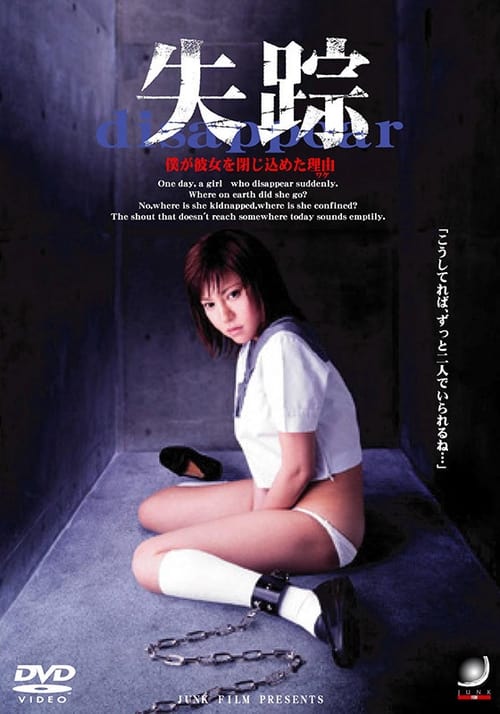
Disappear
2005
No user ratings available yet
Representation score: 2.3 out of 10

Representation Score
Good
2013
Director
Takashi Ishii
Runtime
144 minutes
Average Rating
No ratings yetNew Showbiz Analysis
Sweet Whip is a character study that prioritizes the ability to act of its female lead over traditional victimhood. By centering on Naoko's transition from a captive to a specialized medical professional, the film subverts expected gendered power dynamics. The narrative's strength lies in its complex, situational morality. It moves beyond simple clichés of good and evil to explore the psychological truth of a survivor who maintains a dark, secondary persona. However, the film remains limited by its narrow social scope. The lack of diverse casting and explicit LGBTQ+ visibility prevents a more inclusive representation of the human experience.
Category Breakdown
The film explores unconventional interpersonal dynamics and intense intimacy. While it challenges typical romantic clichés, it does not explicitly confirm specific LGBTQ+ identities.
Naoko disrupts traditional hierarchies by evolving from a victim into a professional who play a significant role in driving the story. Her intellect and survivalist nature challenge the cliché of the passive, damaged woman.
As a localized Japanese production, the film reflects a homogeneous social environment. It lacks the multi-layered approach required for a higher score.
The narrative critiques traditional justice through a lens of moral relativism. It prioritizes individual psychological truth over conventional societal expectations of goodness.
The story examines the psychological impact of trauma as an invisible disability. Naoko’s arc focuses on her professional competence and resilience despite her history of mental struggle.
Present on Screen
Limited or Absent
Official Synopsis
When Naoko was a freshman in high school she was kidnapped and imprisoned by a man who lived next door. For one month, she went through hell. Finally, she killed the man and escaped. Now as an adult, Naoko is a doctor specializing in infertility treatment, but she also has another side.
2005

2011

1981

2005

2004

2000

1988

2007
No reviews yet. Be the first to share your thoughts on this movie!
Use the rating form above to leave a star rating and optional review.