
Ruthless! The Musical
2019
No user ratings available yet
Representation score: 3.1 out of 10
Representation Score
Limited
2011
NRDirector
Marc Evans
Runtime
110 minutes
Average Rating
No ratings yetNew Showbiz Analysis
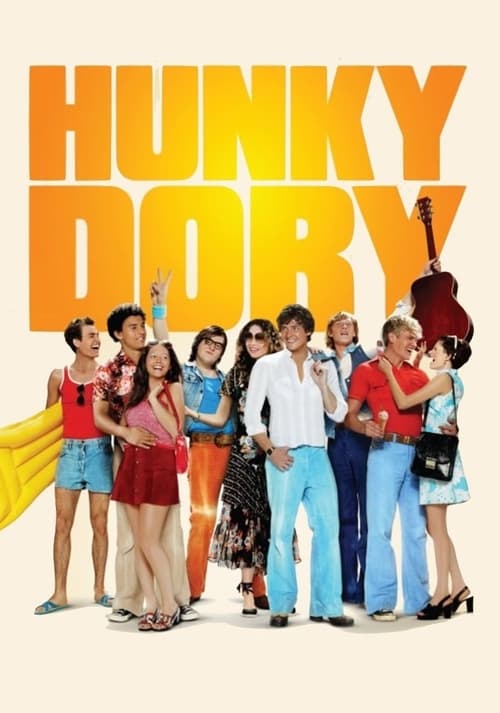
Hunky Dory is a period-specific character study that prioritizes historical and geographic accuracy over the way different parts of someone's identity overlap. While it avoids sanitized mainstream clichés through its focus on localized, non-traditional settings, it remains tied to the demographic realities of 1976 Wales. The film’s primary strength lies in its central female leadership, which challenges traditional authority. However, the lack of diverse ethnic representation and queer presence limits its progressive impact. Ultimately, the narrative functions as a study of teenage apathy and institutional friction rather than a systemic deconstruction of social norms.
Category Breakdown
The film follows a conventional social framework without featuring any queer characters or narratives that question the assumption that everyone is straight or cisgender.
Vivienne, the female protagonist, leads a production in a male-dominated environment, playing a significant role in challenging traditional institutional hierarchies.
Set in a small Welsh town in 1976, the cast is primarily white, reflecting the period's homogeneous demographics without incorporating diverse ethnic backgrounds.
The story explores the tension between institutional structures and individual expression, offering a subtle critique of social conformity and traditional authority.
There is no documented evidence of visible or invisible disabilities being portrayed within the main character arcs.
Present on Screen
Limited or Absent
Official Synopsis
In the heat of the summer of 1976, drama teacher Vivienne fights sweltering heat and general teenage apathy to put on an end-of-term version of Shakespeare's The Tempest.
2019

2021

1956
1997

2014

2004
2011

2012
No reviews yet. Be the first to share your thoughts on this movie!
Use the rating form above to leave a star rating and optional review.