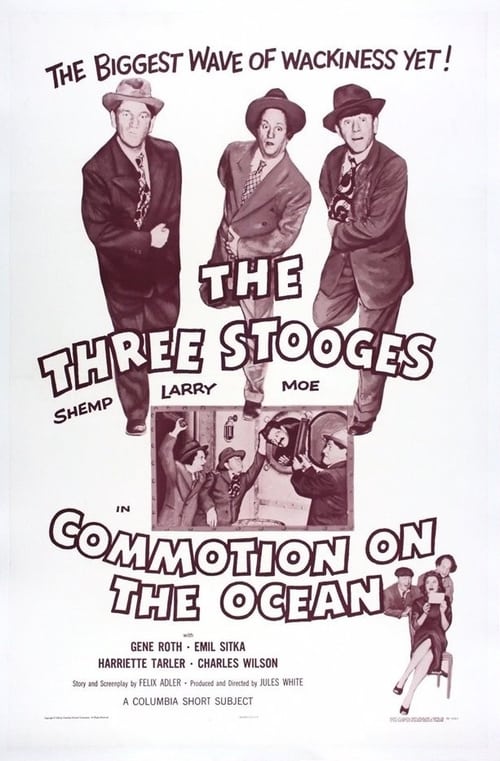
Commotion on the Ocean
1956
No user ratings available yet
Representation score: 0.6 out of 10
Representation Score
Minimal
1956
Director
Jules White
Runtime
16 minutes
Average Rating
No ratings yetNew Showbiz Analysis
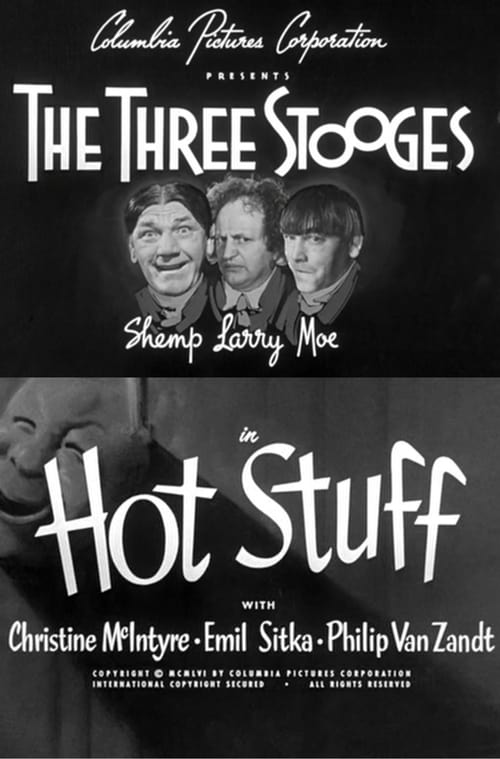
Hot Stuff is a product of mid-1950s slapstick tradition, prioritizing physical gags over social or cultural complexity. The narrative adheres strictly to the era's established social hierarchies and comedic clichés. The film lacks representation across almost all diversity metrics, functioning as a standard genre piece. It relies on conventional formulas, such as the 'heroic rescue' and 'foreign threat' archetypes, which reinforce traditional storytelling. Ultimately, the work does not attempt to challenge norms or engage with progressive themes, focusing instead on situational comedy and the preservation of institutional stability.
Category Breakdown
The film does not include any LGBTQ+ characters or non-straight relationships. The plot revolves around a typical comedic misunderstanding involving government agents and kidnappers.
Gender roles follow a traditional structure. The professor's daughter serves as a secondary figure and a catalyst for the rescue rather than a character with independent influence.
The narrative uses a 'foreign country' cliché common in 1950s cinema. It relies on an 'us vs. them' geopolitical framework without showing diverse casting that reflects multiple aspects of identity.
The story upholds mid-century Western values regarding government authority and scientific progress. It lacks any critique of Western institutions or moral relativism.
There is no indication that characters with visible or invisible disabilities are integrated into the narrative or portrayed with real power.
Present on Screen
Limited or Absent
Official Synopsis
The stooges are government agent entrusted with protecting professor Sneed, who has invented a super rocket fuel. Larry is mistaken for the professor by foreign agents who kidnap the trio and take them to the country of Anemia where they are ordered to produce the rocket fuel or be executed. The boys come up with a concoction they try to pass of as the real stuff, but are exposed when the real professor and his daughter are also kidnapped. The stooges help them escape, using their secret formula to fuel a jeep.
1956

1951
1956
1949
1955
1955
1953
1954
No reviews yet. Be the first to share your thoughts on this movie!
Use the rating form above to leave a star rating and optional review.