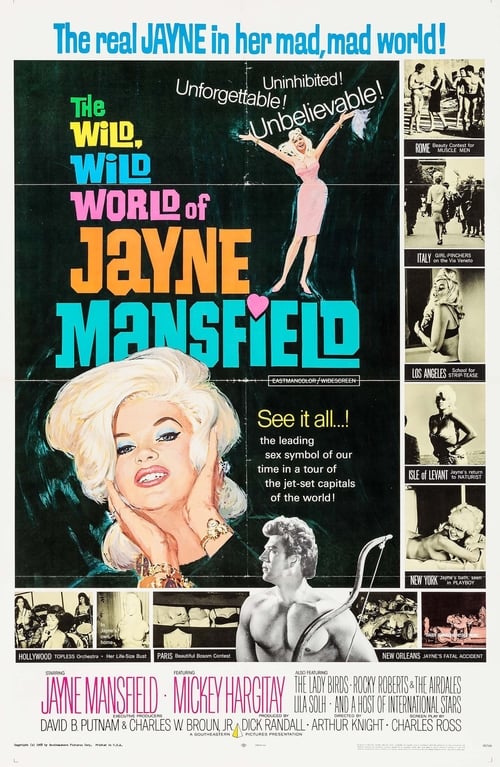
The Wild, Wild World of Jayne Mansfield
1968
No user ratings available yet
Diversity score: 3.8 out of 10

2002
UnratedDirector
John Watkin
Runtime
46 minutes
Average Rating
No ratings yetSynopsis
Through vintage film clips of past Bond movie epics, and with the participation of several former "Bond Girls" as interviewees (among them Dr. No's Ursula Andress and Diamonds Are Forever's Jill St. John), the documentary traces the evolution of the typical James Bond heroine from decorative damsel in distress to gutsy (but still decorative) participant in the action.
Overall Score
Fair
Category Breakdown
LGBTQ+ Representation
The film focuses on the heteronormative romantic dynamics central to the Bond franchise. It lacks narratives that critique heteronormativity or include non-cisnormative identities.
Gender Representation
The documentary highlights the shift from passive damsels to characters with increased autonomy. By centering the actresses' reflections, it critiques the historical tendency to treat women as decorative objects.
Racial & Ethnic Diversity
Representation appears centered on Western and Anglo-Saxon archetypes. The film traces a heroine evolution within a framework that has historically lacked significant racial diversity.
Religious & Cultural Diversity
The film acts as a piece of film historiography focused on Western pop culture. It examines established cultural norms rather than actively deconstructing them.
Disability Representation
There is no evidence that disability, neurodivergence, or chronic illness are central themes or featured elements in this documentary.
Strengths
Areas for Improvement
AI Analysis
Bond Girls Are Forever provides a necessary meta-commentary on the evolution of female agency within a rigid cinematic franchise. By utilizing firsthand testimony from actresses like Ursula Andress, the film moves beyond mere observation to critique historical gendered power dynamics. However, the documentary remains largely observational rather than transformative. It operates within a traditionalist framework that focuses on Western pop culture icons, failing to address intersectional identities or broader social critiques. Ultimately, the film documents the slow progress of character development without fundamentally disrupting the franchise's established hierarchies or addressing significant racial and LGBTQ+ diversity.
1968
2006
1995
1965

1997
2007
2021

2015
2012
1999

2024
2000
No reviews yet. Be the first to share your thoughts on this movie!
Use the rating form above to leave a star rating and optional review.