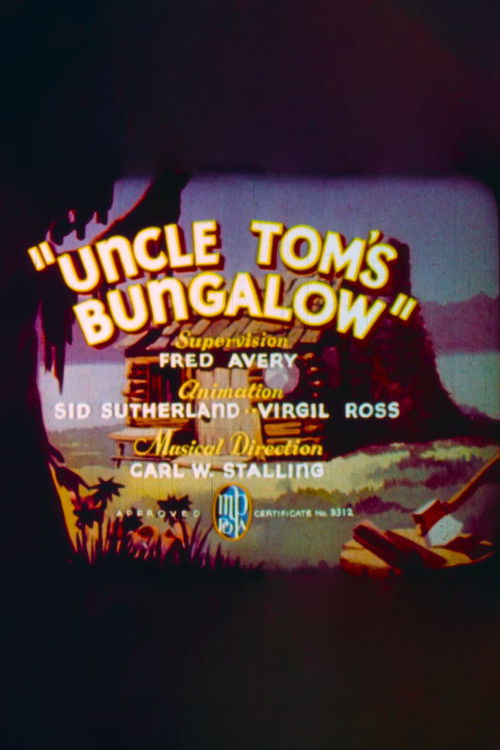
Uncle Tom's Bungalow
1937
No user ratings available yet
Representation score: 0.1 out of 10
Representation Score
Minimal
1931
PassedDirector
Rudolf Ising
Runtime
7 minutes
Average Rating
No ratings yetNew Showbiz Analysis
This 1931 animated short reflects early Hollywood's reliance on racial caricatures and rigid social hierarchies. While the all-Black cast offers a significant demographic presence for its time, the narrative is built around the 'Uncle Tom' stereotype, limiting character development and reinforcing historical stereotypes. The film's approach to spirituality and gender remains conventional. Religious themes are presented as musical novelties rather than complex explorations, and gender dynamics stay strictly traditional. Overall, the work upholds the social and racial frameworks of the early sound era without challenging them.
Category Breakdown
The film does not include any LGBTQ+ characters or non-cisgender identities. The story follows traditional heterosexual norms without any hints of queer identities.
Gender roles adhere to strict 1930s hierarchies. Female characters lack significant influence or intelligence, focusing instead on slapstick humor and musical performances.
The film features an all-Black cast but relies on the 'Uncle Tom' stereotype. This cliché reinforces racial hierarchies through stylized, stereotypical settings without nuanced character development.
Spiritual themes like 'Hallelujah Land' engage with Black traditions through musical novelty. The depiction remains traditional and aligns with typical 1930s commercial standards.
The film does not feature any characters with visible or invisible disabilities used as plot devices or portrayed with significant influence.
Present on Screen
Limited or Absent
Official Synopsis
Piggy and Fluffy have adventures on a riverboat and Uncle Tom is chased by skeletons promising to take him to Hallelujah Land.
1937
1936
1938
1944
1942
No reviews yet. Be the first to share your thoughts on this movie!
Use the rating form above to leave a star rating and optional review.