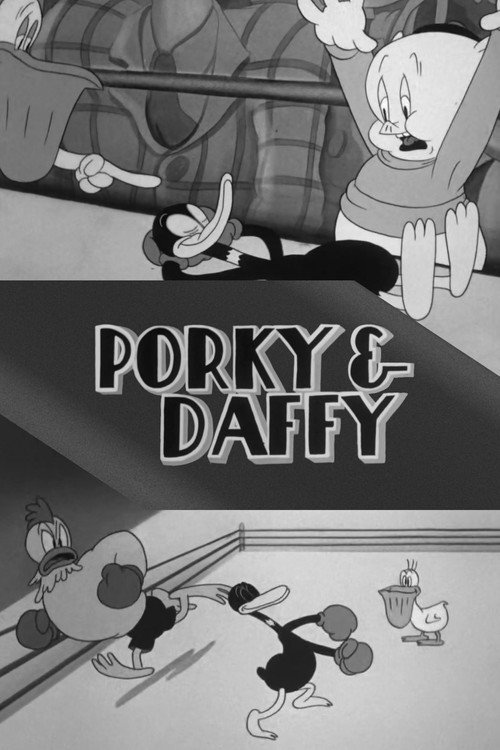
Porky & Daffy
1938
No user ratings available yet
Representation score: 0.4 out of 10
Representation Score
Minimal
1937
ApprovedDirector
Ub Iwerks
Runtime
7 minutes
Average Rating
No ratings yetNew Showbiz Analysis
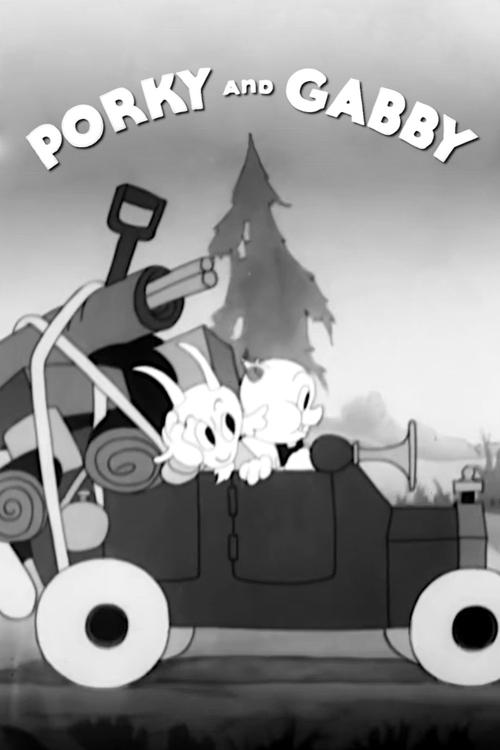
Porky and Gabby is a product of its era, built upon traditional comedic formulas and standard social hierarchies. The film offers no disruption of conventional expectations or progressive social frameworks. The narrative relies on anthropomorphic characters and slapstick humor, which limits the opportunity for multi-layered storytelling. The focus remains strictly on escapist entertainment rather than social or cultural engagement. Ultimately, the work reflects the homogeneous casting and rigid gender roles prevalent in 1930s animation, providing almost no representation of diverse identities or lived experiences.
Category Breakdown
The film does not depict any queer dynamics or non-cisgender identities. The interactions follow a traditional, heterosexual-focused comedic structure typical of 1930s animation.
Gabby Goat serves as a traditional female counterpart to Porky Pig. The narrative reinforces standard gender roles and social expectations without challenging them.
The cast lacks racial or ethnic diversity, focusing instead on anthropomorphic animal characters. The production reflects the homogeneous casting standards of early American animation.
The short prioritizes escapist musical gags over social commentary. It avoids engaging with systemic critiques or the deconstruction of Western institutions.
There is no representation of physical, sensory, or neurodivergent disabilities. Slapstick comedy is used, but disability is not integrated into the character arcs.
Present on Screen
Limited or Absent
Official Synopsis
Porky Pig and ill-tempered Gabby Goat go on a camping outing. Chaos ensues.
1938
1939
1939
1941
1944
1944
1936
1940
No reviews yet. Be the first to share your thoughts on this movie!
Use the rating form above to leave a star rating and optional review.