Anton's Right Here
2012
No user ratings available yet
Representation score: 8.2 out of 10
Representation Score
Fair
2015
Director
Jerzy Sladkowski
Runtime
92 minutes
Average Rating
No ratings yetNew Showbiz Analysis
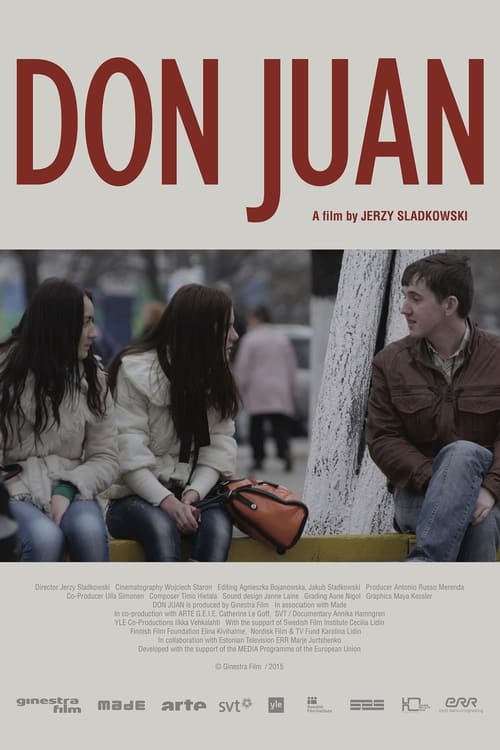
Don Juan is a specialized documentary that prioritizes the deconstruction of psychological norms over broad demographic representation. By providing a platform for a neurodivergent protagonist, it offers a raw look at life on the periphery of social expectations. While the film lacks diversity in terms of race and sexual orientation, it provides a profound critique of institutional authority. It challenges traditional societal definitions of masculinity and productivity. Ultimately, the work functions as a character study that disrupts conventional coming-of-age clichés, favoring a complex exploration of individual reality over traditional social integration.
Category Breakdown
The film does not focus on LGBTQ+ identities or orientations. It emphasizes neurodivergence rather than sexual orientation.
The film explores strained gender dynamics through a dominant maternal figure. It highlights the protagonist's failure to meet societal standards of masculinity.
Set in Nizhny Novgorod, Russia, the film seems to depict a homogeneous social environment with no apparent racial diversity.
The film critiques traditional institutions and medical hierarchies. It portrays the protagonist's social detachment as a valid, though challenging, way of living.
The film centers on neurodivergence and the daily struggles of living with autism. It avoids inspirational stories and focuses on the difficulties faced in a neurotypical world.
Present on Screen
Limited or Absent
Official Synopsis
Twenty-two-year-old Oleg doesn’t live up to his mother Marina’s idea of a real man. She thinks he’s an autistic loafer. He’s enrolled at the University of Nizhny Novgorod and is supposed to be watching online lectures, but his mother says all he actually does is hang around watching TV. Oleg doesn’t have any need for friendships, either. Marina wants him to improve his life and subjects him to a series of unconventional treatments. In one particularly uncomfortable scene, we see the therapist riding him as if he were a horse. Another psychiatrist tells Oleg how useless he is and that he will always be alone. Strangely enough the camera seems to be welcome everywhere, and it closely follows these dramatic developments.
2012
2016
2012

2001
2014

2009

2007
2004
No reviews yet. Be the first to share your thoughts on this movie!
Use the rating form above to leave a star rating and optional review.