
The Crimson Ghost
1946
No user ratings available yet
Representation score: 0.5 out of 10
Representation Score
Minimal
1949
ApprovedDirector
Thomas Carr, Spencer Gordon Bennet
Runtime
246 minutes
Average Rating
No ratings yetNew Showbiz Analysis
This 1949 adventure serial follows a traditional hero’s journey, emphasizing straightforward action and clear moral contrasts. The narrative focuses on established social hierarchies and mid-century genre conventions. The character's ability to drive the story is limited to a few Western protagonists, even though the setting includes international locations. The film upholds the status quo without challenging social or cultural norms. Overall, the production reflects the homogeneous casting and traditional gender roles typical of the B-movie era, lacking in storytelling that reflects multiple aspects of identity and diverse representation.
Category Breakdown
The film does not include any LGBTQ+ characters or non-straight relationships. It follows the traditional romantic and social structures common in 1940s adventure movies.
Bruce Gentry is the main character who drives the action and intelligence. Nita Hodges, as the rancher's sister, plays a supportive role but does not play a significant role in driving the story.
The story involves an attack on the Panama Canal, but the focus stays on Western characters. There are no characters of color with substantial roles.
The narrative emphasizes the protection of national interests and infrastructure. It uses a simple good versus evil theme without the nuanced moral complexity seen in modern works.
There are no visible or hidden disabilities shown. The film does not feature any characters with neurodivergent traits or physical impairments.
Present on Screen
Limited or Absent
Official Synopsis
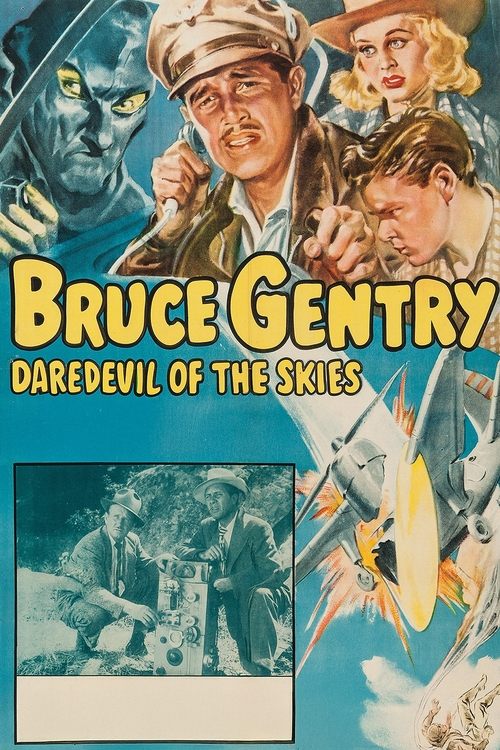
Famed aviator Bruce Gentry is working with scientist Andrew Benson, setting out to uncover the origin of a deadly secret weapon---an electronically controlled flying disc which can be directed at moving or stationary targets. The disc was master-minded by an enemy agent known only as "The Recorder" because...he speaks entirely via recordings. Aided by rancher Frank Farrell and his sister Juanita "Nita" Hodges, Gentry consistently foils "The Recorders" schemes, which are carried out by "The Recorder's" henchmen, Krendon, Allen and Chandler, including an attack on the Panama Canal.
1946
1940
1949
1964
1937
1942
1950

1952
No reviews yet. Be the first to share your thoughts on this movie!
Use the rating form above to leave a star rating and optional review.