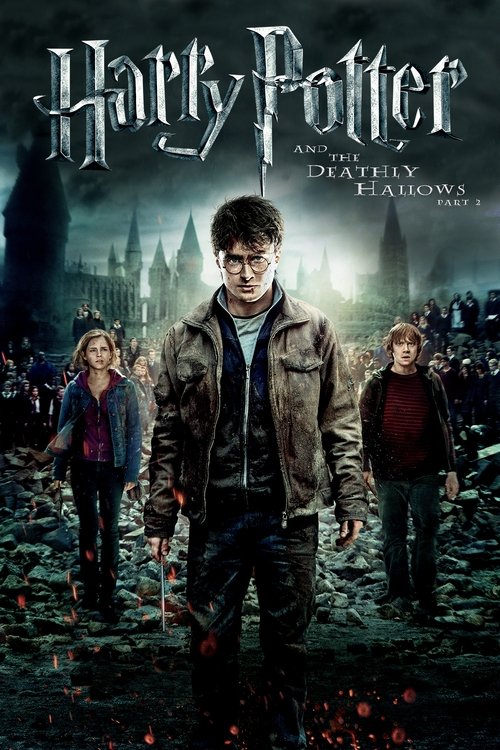
Harry Potter and the Deathly Hallows: Part 2
2011
No user ratings available yet
Representation score: 6.3 out of 10
Representation Score
Fair
2010
PG-13Director
David Yates
Runtime
146 minutes
Average Rating
No ratings yetNew Showbiz Analysis
The film argues that rigid social hierarchies and corrupt institutions are obstacles to true freedom and justice. It positions individual loyalty, intelligence, and moral courage as the only reliable guides in a world where traditional authority has failed. The narrative suggests that breaking free from inherited systems of power requires personal sacrifice and a willingness to question established norms. The final moral word is one of resilient hope, emphasizing that even in the darkest times, the choice to do what is right remains a powerful force.
Category Breakdown
No LGBTQ+ characters or same-sex romance appear in the film. The narrative focuses entirely on the trio’s survival and the hunt for Horcruxes. Romantic tension between Harry and Hermione is implied but never explicitly addressed as a relationship.
Hermione Granger serves as the intellectual center, solving puzzles and driving the plot forward while Harry and Ron react emotionally. She endures the physical ordeal in the cave to save the group, establishing her competence as the group’s anchor. Traditional gender roles are inverted, with the female lead providing the logic and endurance required for survival.
The cast is predominantly white, reflecting the source material’s British setting. Diversity is limited to a few supporting characters, such as the mixed-race Bill Weasley and the Black house-elf Dobby. The film’s racial dynamics are largely symbolic, using "pure-blood" ideology to explore class and hierarchy rather than real-world ethnic representation.
The film critiques rigid social hierarchies, portraying the "pure-blood" elite as cruel and the Ministry of Magic as corrupt and ineffective. Traditional institutions like the school and government are shown as failing, forcing the characters to rely on their own loyalty and resourcefulness. The narrative favors individual agency and chosen family over established societal structures.
No characters with lasting physical or cognitive disabilities are featured. Dobby, a house-elf, is depicted as a subhuman class owned by others, but his status is magical rather than a representation of human disability. The film does not explore disability as a lived experience or social issue.
Present on Screen
Limited or Absent
Official Synopsis
Harry, Ron and Hermione walk away from their last year at Hogwarts to find and destroy the remaining Horcruxes, putting an end to Voldemort's bid for immortality. But with Harry's beloved Dumbledore dead and Voldemort's unscrupulous Death Eaters on the loose, the world is more dangerous than ever.
2011
2000
2007

1978
2009

2008
2005
2000
No reviews yet. Be the first to share your thoughts on this movie!
Use the rating form above to leave a star rating and optional review.