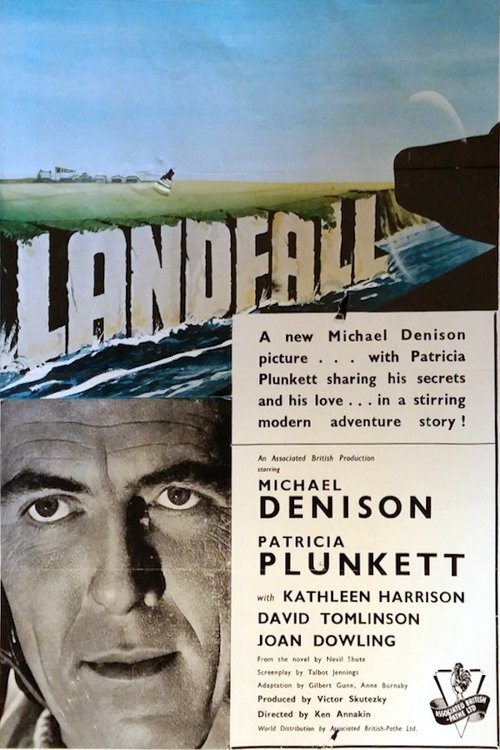
Landfall
1949
No user ratings available yet
Representation score: 1.3 out of 10
Representation Score
Minimal
1952
ApprovedDirector
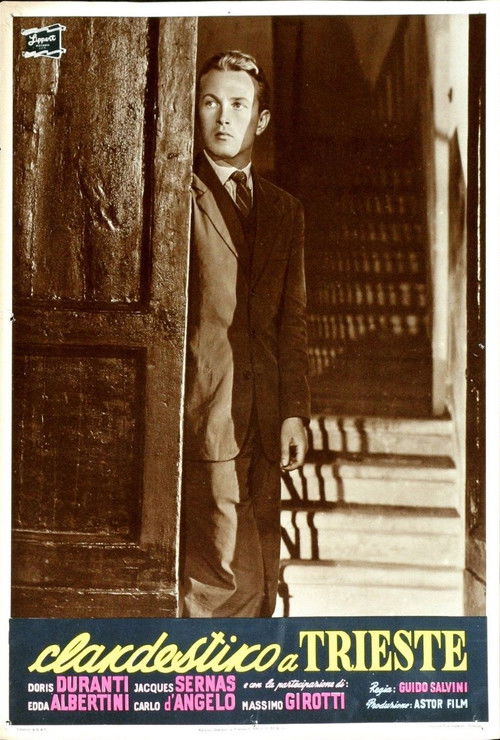
Guido Salvini
Average Rating
No ratings yetNew Showbiz Analysis
Fugitive in Trieste is a mid-century period drama that emphasizes wartime melodrama and romantic entanglements. While it offers a nuanced exploration of legal culpability and accidental military actions, the narrative remains anchored in the social hierarchies of 1950s European cinema. The film provides functional ability to act to female characters, who play key roles in resolving the plot. However, these roles are largely defined by their relationships to the male protagonist and traditional feminine archetypes. Overall, the film lacks multi-layered complexity. It addresses geopolitical tensions through a narrow lens of Italian, Allied, and Austrian identities without challenging traditional social or gender structures.
Category Breakdown
The film centers on a four-way romantic relationship that emphasizes heterosexual dynamics. There are no representations of non-binary genders or critiques of the assumption that everyone is straight or cisgender.
Women's roles are primarily defined through romantic relationships and traditional feminine clichés. A female character provides functional ability to act by finding a witness to ensure justice.
The story delves into the ethnic complexities of Trieste, focusing on Italian, Allied, and Austrian identities. However, it does not explore broader racial diversity.
The film examines wartime ethics and accidental bombings within established Western institutional frameworks. It does not critique these institutions.
There is no mention of characters dealing with physical, neurodivergent, or mental health conditions.
Present on Screen
Limited or Absent
Official Synopsis
An Italian Air Force officer is pursued and captured by the Allied police and is charged with the bombing of a hospital ship. Through the efforts of his sweetheart, a witness is found who proves the bombing was not intentional but the result of being hit by enemy fire. A four-way romantic involvement is also part of the mix that includes an Allied officer and Viennse beauty Lida. The latter was once in love with the accused and has a child by him.
1949
1954

1951
1938
1948
1952
1949

1949
No reviews yet. Be the first to share your thoughts on this movie!
Use the rating form above to leave a star rating and optional review.