Find another title
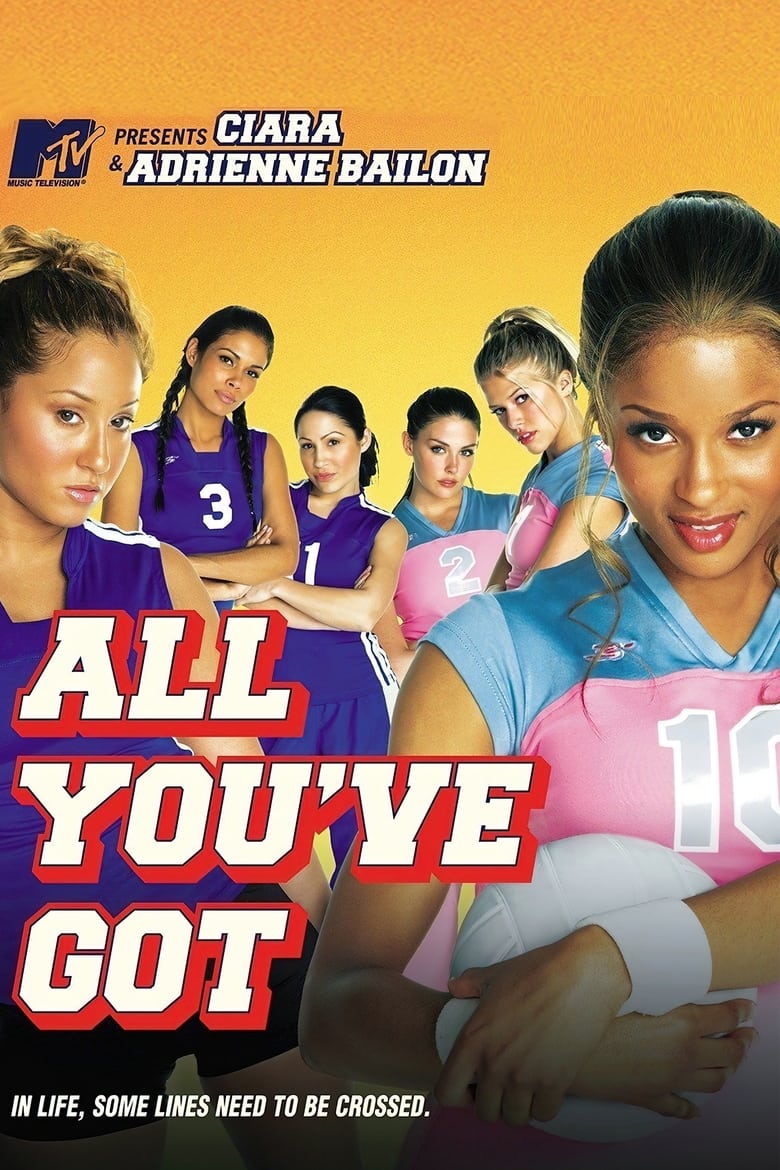
All You've Got
2006
PG-13Director
Neema Barnette
Runtime
95 minutes
Average Rating
No ratings yetSynopsis
Three friends' love for volleyball is tested to the limit when their school burns to the ground and they are forced to join a rival school in order to win the national championship.
Where to Watch
Diversity & Representation
Overall Score
Fair
Category Breakdown
LGBTQ+ Representation
The film lacks LGBTQ+ characters or narratives addressing non-cisnormative identities. It focuses on traditional interpersonal dynamics within the central friendship group.
Gender Representation
The story prioritizes female agency and emotional resilience. It disrupts male-centric sports tropes by centering the athletic determination and intellect of young women.
Racial & Ethnic Diversity
A predominantly Black cast centers the lived experiences of characters of color. The narrative uses the Black experience as its foundational lens within an urban context.
Religious & Cultural Diversity
The film explores community resilience and the struggles of working-class characters. It emphasizes interpersonal connections over institutional stability during times of upheaval.
Disability Representation
There is no significant evidence regarding the portrayal of visible or invisible disabilities within the narrative.
Strengths
- Strong centering of Black female agency and athletic determination.
- Authentic portrayal of racial and communal identity within an urban context.
- Disrupts male-centric sports tropes by prioritizing female emotional resilience.
Areas for Improvement
- Lack of LGBTQ+ representation or non-cisnormative identities.
- Absence of characters representing visible or invisible disabilities.
- Limited exploration of diverse cultural or religious perspectives.
AI Analysis
All You've Got succeeds as a character-driven sports drama that centers the agency of Black women. By focusing on the social and emotional complexities of its protagonists, the film moves beyond simple athletic triumph to explore communal identity. The production avoids the typical white gaze, instead grounding the story in a specific urban socioeconomic context. This approach provides a nuanced look at how a community navigates systemic challenges and institutional loss. However, the film's diversity is narrow in scope. It lacks representation for LGBTQ+ identities and does not feature characters with disabilities, focusing instead on a more traditional social framework.
Rate this Movie
Reviews
No reviews yet. Be the first to share your thoughts on this movie!
Use the rating form above to leave a star rating and optional review.