Hostage
1987
No user ratings available yet
Representation score: 4.1 out of 10
Representation Score
Minimal
2004
Director
Milan Luthria
Runtime
161 minutes
Average Rating
No ratings yetNew Showbiz Analysis
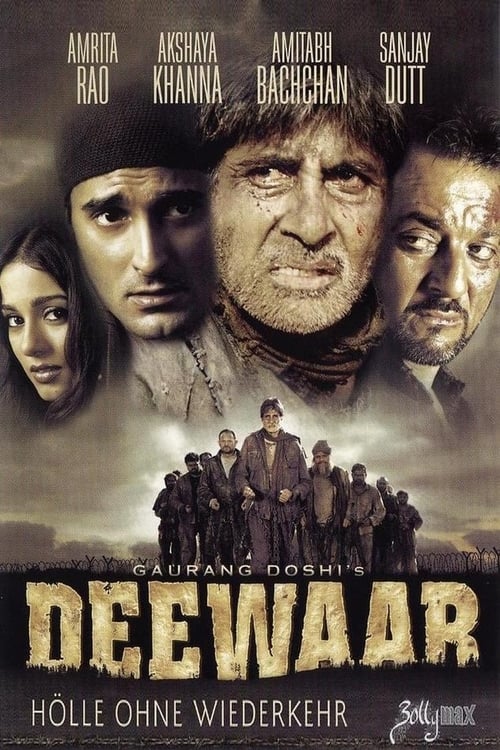
Deewaar: Let's Bring Our Heroes Home is a conventional genre piece that prioritizes established nationalistic narratives. The story focuses on a rescue mission and the bond between a soldier and his son, reinforcing traditional masculine archetypes. The film operates within a framework of patriotism and military duty. While it engages with the geopolitical tensions between India and Pakistan, it does not use these conflicts to explore diverse or multi-layered identities. Ultimately, the film adheres to standard social structures and heroic clichés. It lacks the complexity required to challenge existing power dynamics or provide representation for underrepresented groups.
Category Breakdown
The film centers on traditional masculine bonds and familial duties. It does not include any characters with non-conforming gender identities or critique straight-centered assumptions.
The plot emphasizes male-centric action and military camaraderie. The central conflict is driven through a traditional masculine lens, with little involvement of female characters or their ability to act.
The film explores the complex relationship between India and Pakistan. However, it prioritizes nationalistic duty over diverse representations of different communities.
The story aligns with traditional patriotic frameworks and national honor. It celebrates conventional notions of heroism and loyalty to military institutions.
There is no mention of characters navigating physical or neurodivergent disabilities within the provided context.
Present on Screen
Limited or Absent
Official Synopsis
Major Ranvir Kaul (Amitabh Bachchan) is a POW who was captured along with over 50 soldiers by Pakistani soldiers in 1971 during the war between India and Pakistan. 33 years later Ranvir's son Gaurav (Akshaye Khanna) decides to go on a rescue mission to Pakistan and bring back his father who he has not seen since he was a child. Helping him on his mission is Khan (Sanjay Dutt) who had successfully escaped from the same prison. They steal, kill, and plan to get the prisoners out. This movie is inspired by the film The Great Escape.
1987

2011
2003
2006
1996
1965

2005
1988
No reviews yet. Be the first to share your thoughts on this movie!
Use the rating form above to leave a star rating and optional review.