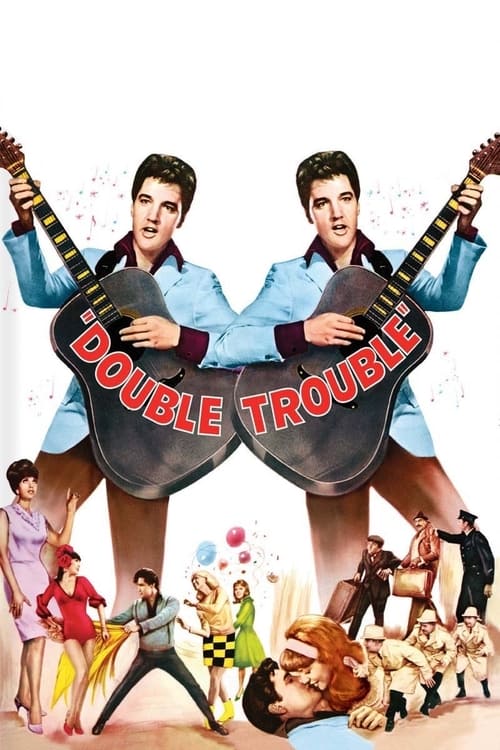
Double Trouble
1967
No user ratings available yet
Diversity score: 2.2 out of 10

1969
GDirector
William A. Graham
Runtime
93 minutes
Average Rating
No ratings yetSynopsis
Dr. John Carpenter takes the job of running a health center in a low-income district. He enlists three women to help out who — unbeknownst to him — are actually nuns in street clothes. The church wants to improve the neighborhood but fears that nuns in full habit would be poorly received. Unaware of her unavailability, John falls for Sister Michelle, serenading her with his guitar — which, luckily for him, effectively wears away at her religious resolve.
Overall Score
Fair
Category Breakdown
LGBTQ+ Representation
The film adheres to the heteronormative standards of the late 1960s. The central romantic arc focuses on a traditional heterosexual dynamic between Dr. John Carpenter and Sister Michelle.
Gender Representation
The narrative explores female agency through a woman's transition from religious life to a secular existence. Jane Fonda's character demonstrates autonomy by prioritizing personal desires over patriarchal religious dictates.
Racial & Ethnic Diversity
The cast is predominantly white, reflecting the demographic homogeneity of mainstream productions from this era. The low-income setting lacks diverse casting or meaningful racial intersectionality in its primary arcs.
Religious & Cultural Diversity
The story deconstructs traditional religious institutions by framing a departure from vows as a journey toward personal fulfillment. It explores the tension between spiritual duty and romantic individualism.
Disability Representation
There is no significant depiction of visible or invisible disabilities within the character details or narrative.
Strengths
Areas for Improvement
AI Analysis
Change of Habit functions as a cinematic artifact of the late 1960s, capturing the friction between institutional authority and rising individualism. It succeeds in portraying a nuanced shift in female autonomy, moving away from submissiveness toward personal agency. However, the film remains limited by the era's social norms, showing a lack of racial diversity and queer representation. The narrative is centered on a traditional heterosexual romance and a predominantly white cast. Ultimately, the film's strength lies in its exploration of secularization and the internal evolution of its protagonist, even as it fails to challenge broader demographic homogeneity.
No reviews yet. Be the first to share your thoughts on this movie!
Use the rating form above to leave a star rating and optional review.