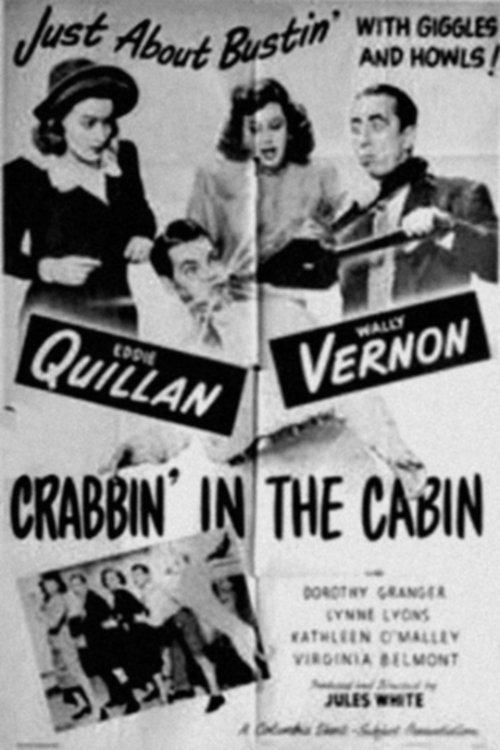
Crabbin' in the Cabin
1948
No user ratings available yet
Diversity score: 2.1 out of 10
No Poster Available
1949
ApprovedDirector
Jules White
Runtime
16 minutes
Average Rating
No ratings yetSynopsis
Vera Vague marries a man who is the twin-image of an escaped ax-murderer. The key word here is "escaped", as that guarantees that Vera will get involved with the ax-murderer thinking he is her husband.
Overall Score
Minimal
Category Breakdown
LGBTQ+ Representation
The film follows a traditional heteronormative romantic structure centered on marriage. There is no evidence of non-cisnormative identities or critiques of heteronormativity.
Gender Representation
While the story centers on female protagonist Vera Vague, her agency is limited by her inability to distinguish between men. She functions more as a subject of chaos than a driver of the plot.
Racial & Ethnic Diversity
The narrative lacks mention of a diverse cast or the blending of racial identities. It appears to reflect the homogeneous casting standards typical of 1949.
Religious & Cultural Diversity
The comedy derives from the disruption of a standard marriage rather than a critique of social institutions. It operates within conventional mid-century social norms.
Disability Representation
There is no mention of characters with physical or neurodivergent disabilities. No specific details are available to assess this category.
Strengths
Areas for Improvement
AI Analysis
Miss in a Mess is a classic comedy of errors that relies heavily on the mistaken identity trope. The plot centers on a protagonist's inability to distinguish her husband from an escaped murderer, prioritizing slapstick over social depth. The film reinforces traditional mid-century archetypes rather than subverting them. The narrative structure focuses on physical humor and the chaos of a disrupted marriage, offering little in the way of progressive social frameworks. Ultimately, the work reflects the era's standard comedic traditions. It prioritizes broad, vaudevillian tropes over intersectional character development or the deconstruction of systemic hierarchies.
1948
1945
1946
1950
1945
1949
1942
1945
1953
1953
1943
1940
No reviews yet. Be the first to share your thoughts on this movie!
Use the rating form above to leave a star rating and optional review.