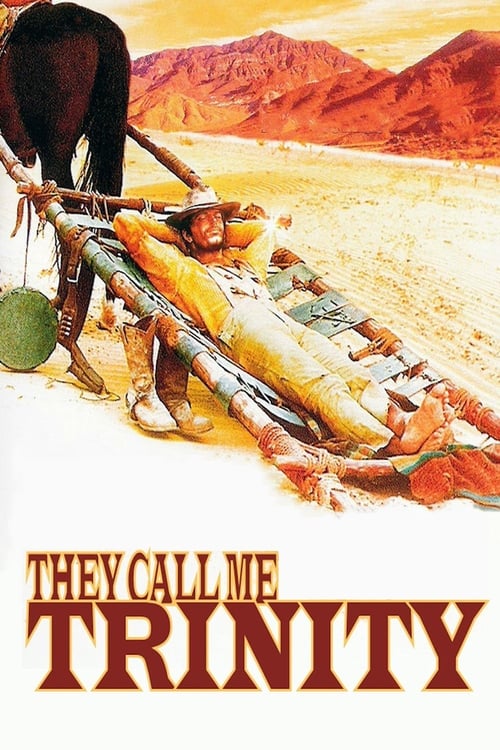
They Call Me Trinity
1970
No user ratings available yet
Representation score: 1.1 out of 10

Representation Score
Limited
1969
PGDirector
Duccio Tessari
Runtime
97 minutes
Average Rating
No ratings yetNew Showbiz Analysis
Alive or Preferably Dead is a comedic Spaghetti Western that prioritizes situational irony and character dynamics over social subversion. The plot focuses on two brothers attempting to secure an inheritance, a premise that leans into genre clichés rather than storytelling that reflects multiple aspects of diversity. The film adheres to the standard conventions of 1969 Italian cinema. It lacks the narrative structure needed to deconstruct social hierarchies or provide meaningful representation for underrepresented groups. Ultimately, the work functions as a traditional character-driven comedy. It reflects the era's limitations, offering a narrow focus on masculine-driven conflict within a conventional Western setting.
Category Breakdown
The film does not include any LGBTQ+ characters or stories that challenge the assumption that everyone is straight or cisgender. It follows the traditional social structures typical of 1969 genre filmmaking.
The plot is driven by male protagonists, Monty and Ted. Women’s ability to drive the story appears secondary to the male-driven conflict and traditional gender hierarchies.
The narrative centers on a traditional Western framework. There is no evidence of a non-white majority or casting intended to disrupt historical norms.
The film utilizes a standard Western setting. While the comedic tone may offer skepticism toward authority, it lacks explicit institutional or cultural critique.
There is no mention of characters possessing visible or invisible disabilities within the narrative.
Present on Screen
Limited or Absent
Official Synopsis
Two brothers, Monty and Ted, will inherit $300,000 if they manage to live together for six months.
1970

1968
1972

1971

1978
1970
1970

1972
No reviews yet. Be the first to share your thoughts on this movie!
Use the rating form above to leave a star rating and optional review.