
Frownland
2008
No user ratings available yet
Representation score: 6.0 out of 10
Representation Score
Good
1986
PGDirector
Mike B. Anderson
Runtime
82 minutes
Average Rating
No ratings yetNew Showbiz Analysis
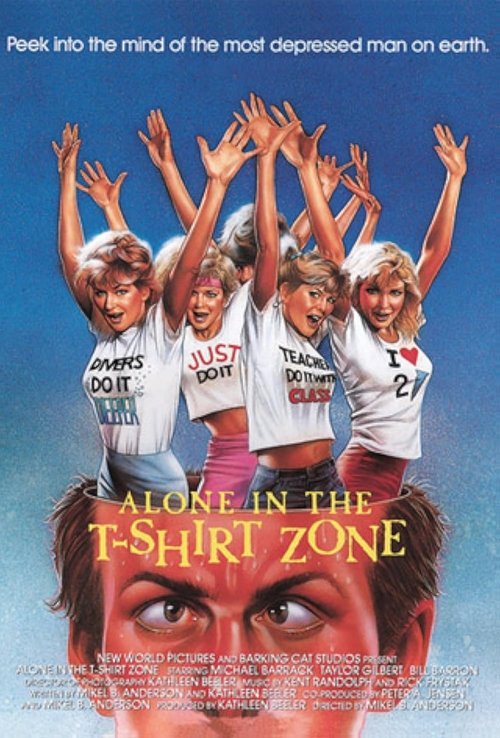
Alone in the T-Shirt Zone is a surreal exploration of psychological breakdown and systemic dysfunction. It offers a nuanced, unsentimental portrayal of mental health and institutional abuse. By focusing on a catatonic protagonist, the film highlights the experiences of neurodivergent individuals. However, the film's scope is limited. It lacks explicit LGBTQ+ representation and follows a conventional, non-diverse demographic structure. While it critiques societal structures, it does so through a narrow lens. Overall, the film presents a progressive critique of power and authority, though it falls short in achieving broad diversity.
Category Breakdown
The film does not include explicit LGBTQ+ identities or relationships that challenge the assumption that everyone is straight. The story centers around a protagonist and his interactions with a female colleague.
Gender hierarchies are challenged by focusing on a vulnerable male protagonist. A female doctor character disrupts traditional authority roles by behaving as a predator rather than a nurturing figure.
There is no indication of a diverse cast or non-Anglo-Saxon majority. The story revolves around a small social circle that adheres to the demographic norms of its time.
The film critiques Western institutions such as capitalism and the medical system. It uses a postmodern lens to question the nuclear family and objective truth.
The story provides a raw look at neurodivergence and mental health. It avoids romanticizing mental illness, instead showing it as a systemic struggle.
Present on Screen
Limited or Absent
Official Synopsis
Michael Mikaele is a young man in a catatonic state living in a psychiatric ward where his doctor thinks her sympathies for him justify raping him. It's all part of his mad world, and we see what brought him there. He's an artist from a broken home, working for eight years at a job that he loathes, drawing pictures from sayings on sexually suggestive T-shirts. Mike's unsympathetic boss, Bill, plays bad motivational tapes over the P.A., makes Mike's girlfriend (another employee) handle him during office hours, which is espied by co-worker Joni, and refuses to let Mike have the rest of the day off even though he is clearly ill. He ties together T-shirts out the bathroom window to escape, and befriends a man, Rod, whom, unbeknownst to him, is his girlfriends father. He, however, hallucinates that the cinematographer is walking around the apartment in nothing but a towel...
2008
2004

1986

1977

1984
1995

2010

1999
No reviews yet. Be the first to share your thoughts on this movie!
Use the rating form above to leave a star rating and optional review.