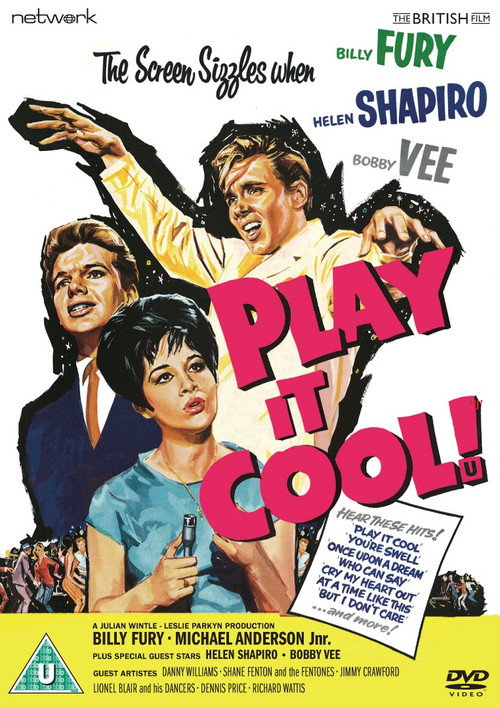
Play It Cool
1962
No user ratings available yet
Representation score: 2.0 out of 10

Representation Score
Limited
1963
Director
Lance Comfort
Runtime
75 minutes
Average Rating
No ratings yetNew Showbiz Analysis
Live It Up! functions as a conventional period piece that mirrors the social and demographic limitations of early 1960s British cinema. The narrative structure prioritizes traditional familial hierarchies and lacks complexity in reflecting multiple aspects of identity. The film's focus on a male protagonist's struggle against his father's expectations reinforces standard masculine roles. It operates within the established social frameworks of its era without attempting to challenge familiar patterns. Ultimately, the work lacks the commitment to inclusion necessary to move beyond a standard mid-century social portrait.
Category Breakdown
The film focuses on a young man's musical ambitions and his domestic friction with his father. There is no evidence of LGBTQ+ identities or narratives that critique the assumption that everyone is straight or cisgender.
The story centers on a male protagonist and his relationship with his father. This dynamic reinforces traditional patriarchal structures and focuses on masculine roles like the aspiring artist and the skeptical patriarch.
The film likely reflects the homogeneous demographic norms of 1963 British cinema. There is no evidence of diverse casting or non-white majority ensembles within the production.
The central conflict involves a generational divide regarding pop music versus traditional stability. The narrative aligns with established social hierarchies and traditional views of parental authority.
No characters are identified as having visible or invisible disabilities. There is no evidence of disability being used as a plot device or portrayed with a significant role in driving the story.
Present on Screen
Limited or Absent
Official Synopsis
A young postman, who fronts a pop group, dreams of being bigger than The Beatles. They record a demo tape, but things seem to be going pear shaped when he loses the tape. There is also his father to contend with who thinks he's wasting his time with all that pop music nonsense.
1962
1978
1973
1958

1957
1963
1969
1964
No reviews yet. Be the first to share your thoughts on this movie!
Use the rating form above to leave a star rating and optional review.