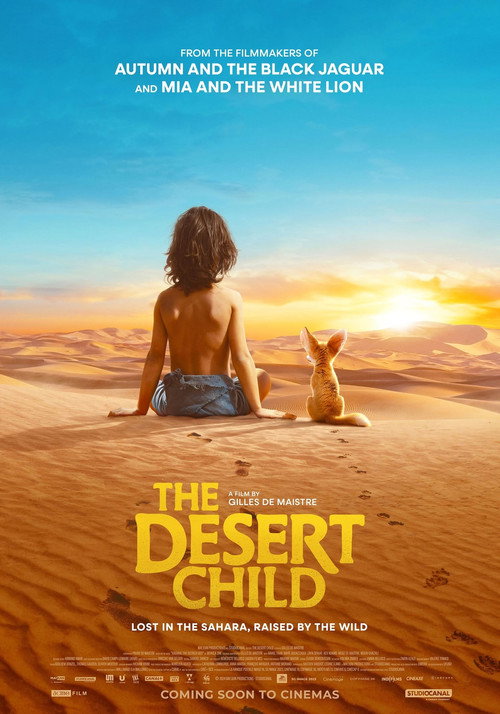
The Desert Child
2026
No user ratings available yet
Representation score: 3.8 out of 10

Representation Score
Fair
1993
Director
Patrick Grandperret
Runtime
86 minutes
Average Rating
No ratings yetNew Showbiz Analysis
The film successfully challenges colonialist narratives by centering the survival and spiritual ability to act of a non-Western community. It avoids including someone from a minority group without giving them real depth by focusing on the reclamation of a social order disrupted by external forces. While it lacks modern identity markers like LGBTQ+ or disability representation, it provides a strong critique of historical power dynamics. The narrative structure elevates indigenous knowledge systems over Western ones. Ultimately, the film’s strength lies in its portrayal of the 'civilized vs. wild' dichotomy, framing the arrival of outsiders as a systemic disruption rather than progress.
Category Breakdown
The film does not explicitly depict LGBTQ+ identities or non-traditional gender expressions. The bond between Oule and Sirga is portrayed as a spiritual connection rather than a relationship that hints at queerness.
A female lioness serves as the main mentor, breaking away from typical male-hero roles by being the keeper of wisdom. However, the human characters mostly follow traditional adventure stories.
The story focuses on the village of Pama and addresses the trauma of the slave trade. It highlights the ability to act and reclamation of community among indigenous people, moving away from Western-centric views.
The narrative presents Western-adjacent expansionism as destructive. It emphasizes an indigenous spiritual framework where the protagonist interacts with nature through animistic wisdom.
There are no visible or mentioned depictions of physical or neurodivergent disabilities within the narrative.
Present on Screen
Limited or Absent
Official Synopsis
In the village of Pama, Sirga the lioness and Oule the young boy, born the same day, grow up together as sister and brother. Oule discovers the world alongside Sirga, and it is through her that he learns the secrets of the brush. He knows how to speak to the trees, the beasts, the bees and the wind. But one day, horsemen arrive from the Nord to take away all of the children of the village in chains and sell them into slavery. Oule and his friend Lena are bought by a nobleman of the high plains who, terrified by Oule's powers, sends him into exile. But Oule posesses the strength of lions and he finds Sirga. With Lena, they will reconstruct the village of Pama...
2026
2007
1998
2018
2011

2005
2024
1942
No reviews yet. Be the first to share your thoughts on this movie!
Use the rating form above to leave a star rating and optional review.