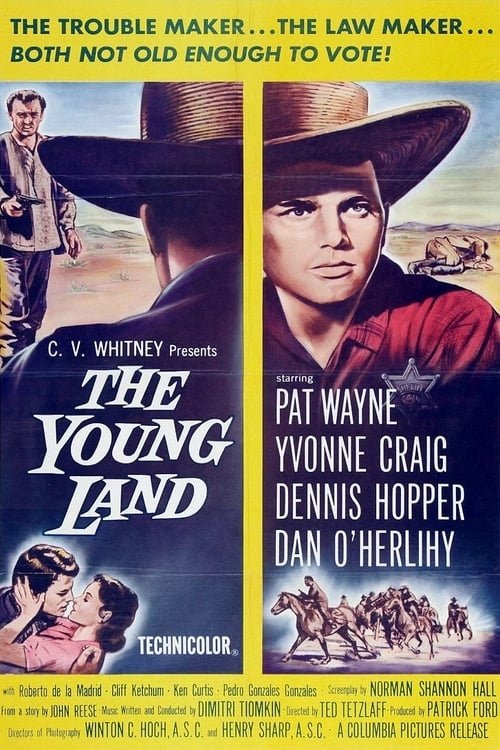
The Young Land
1959
No user ratings available yet
Diversity score: 3.9 out of 10
1969
GDirector
Charles Marquis Warren
Runtime
98 minutes
Average Rating
No ratings yetSynopsis
Vince Hackett's gang steals a prized victory canon from Mexico and blames the deed on ex-member Jess Wade, who wants to go straight.
Overall Score
Limited
Category Breakdown
LGBTQ+ Representation
The film follows a conventional heteronormative framework. There is no evidence of non-cisnormative gender identities or same-sex intimacy.
Gender Representation
The narrative is driven by a male-centric hero’s journey focusing on masculine archetypes. Female presence is minimal and does not challenge the patriarchal frontier structure.
Racial & Ethnic Diversity
The film centers a Mexican protagonist within a Latino cultural context. This provides meaningful representation that moves beyond mere tokenism to grant the character agency.
Religious & Cultural Diversity
The story emphasizes individual justice and personal honor within a traditional Western framework. It does not actively critique Western institutions or capitalism.
Disability Representation
There are no prominent depictions of visible or invisible disabilities. Characters with disabilities are not utilized as central narrative devices.
Strengths
Areas for Improvement
AI Analysis
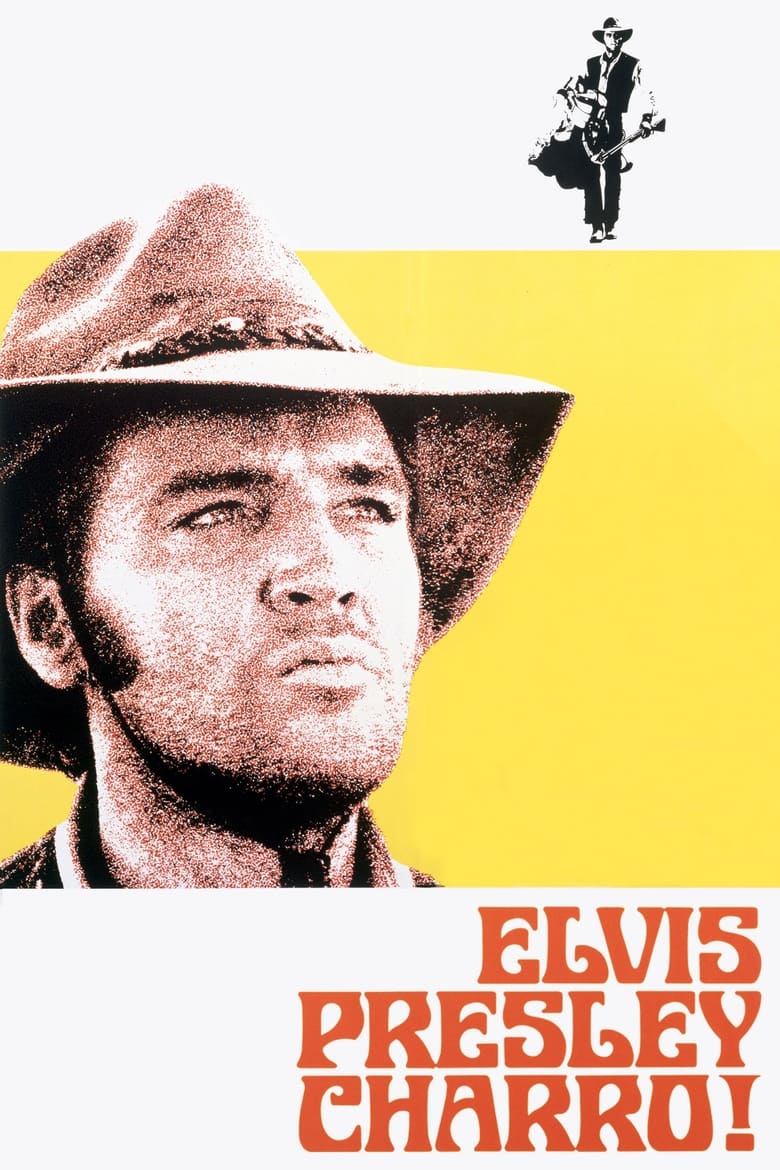
Charro! serves as a transitional Western that disrupts the genre's typical Anglo-centric monopoly. By centering a Mexican protagonist, the film provides a level of cultural depth and agency rarely seen in traditionalist Westerns of the era. However, the film remains anchored in mid-century cinematic structures. It prioritizes masculine archetypes and individualist heroism over the subversion of systemic power dynamics or social hierarchies. Ultimately, while the film offers a culturally grounded character study, it lacks the intersectional complexity or institutional critique necessary to move beyond traditional genre tropes.
No reviews yet. Be the first to share your thoughts on this movie!
Use the rating form above to leave a star rating and optional review.