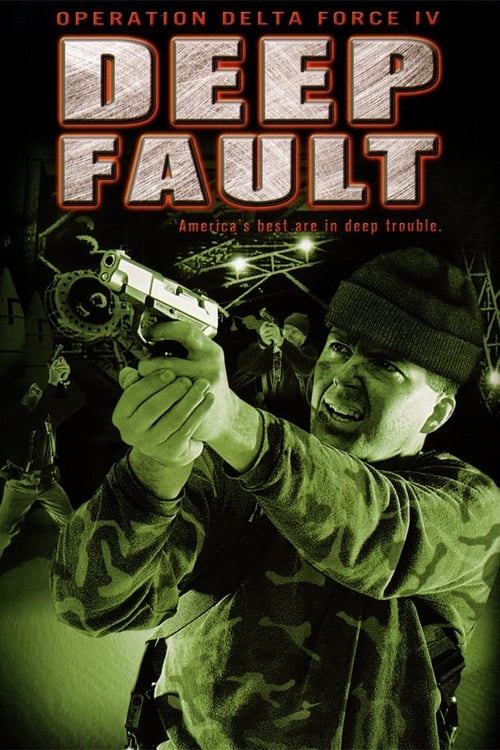
Operation Delta Force 4: Deep Fault
1999
No user ratings available yet
Diversity score: 2.3 out of 10

1990
RDirector
Pierluigi Ciriaci
Runtime
100 minutes
Average Rating
No ratings yetSynopsis
Only one enemy has ever beat him. Now he needs her to save his life.
Overall Score
Limited
Category Breakdown
LGBTQ+ Representation
The film lacks LGBTQ+ characters or narratives. It adheres to the traditional heteronormative structures common in 1990s action cinema.
Gender Representation
A female character is central to the protagonist's survival, yet the narrative likely relies on traditional tropes. There is little evidence of female agency or subversion of gender hierarchies.
Racial & Ethnic Diversity
The film focuses on conventional Western action archetypes. It lacks a non-white majority cast or any indication of race-bent casting to disrupt historical norms.
Religious & Cultural Diversity
The story operates within standard Western action frameworks, emphasizing individual heroism. It reinforces traditional notions of justice rather than exploring secularist or anti-Western themes.
Disability Representation
There is no evidence of characters with visible or invisible disabilities. Physical vulnerability appears to serve as a plot device rather than an exploration of neurodivergence or agency.
Strengths
Areas for Improvement
AI Analysis
This action film functions as a standard genre piece of its era, prioritizing conventional tropes over social complexity. The narrative architecture follows the predictable patterns of early 1990s direct-to-video releases. Representation is minimal across all categories, with a heavy reliance on homogeneous heroic archetypes. The film does not attempt to challenge existing social hierarchies or implement progressive storytelling. Ultimately, the work serves as a time capsule for traditional masculine-led action, lacking intersectional depth or diverse character perspectives.
1999
1990

1991
1989
1992
1992

1989

1991
1999

2021
1993
1980
No reviews yet. Be the first to share your thoughts on this movie!
Use the rating form above to leave a star rating and optional review.