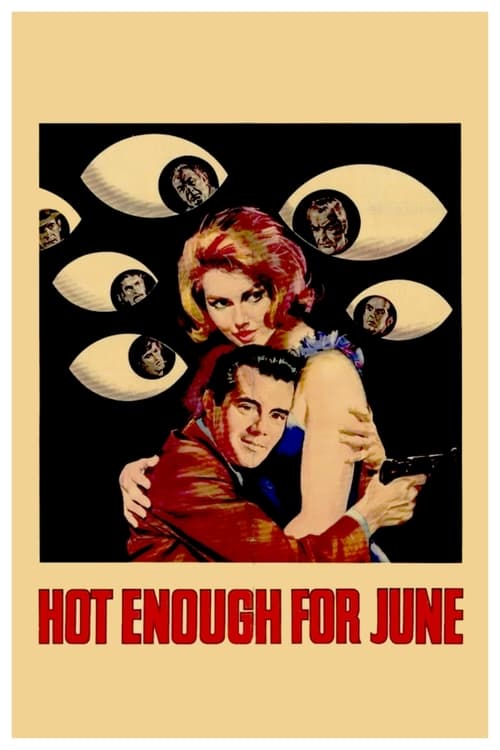
Hot Enough for June
1964
No user ratings available yet
Representation score: 4.1 out of 10

Representation Score
Limited
1960
NRDirector
Carol Reed
Runtime
111 minutes
Average Rating
No ratings yetNew Showbiz Analysis
Our Man in Havana is a sophisticated satire that critiques the perceived competence of Western institutions through its setting. While it presents a diverse, multi-ethnic environment, the narrative ability to act remains focused on the British expatriate protagonist. The film adheres to the social and gender norms of 1960, centering around a male protagonist's accidental espionage. This keeps the gender dynamics conventional and the female roles secondary to the main plot. Ultimately, the film's strength lies in its subversion of the spy thriller genre, replacing institutional gravity with organized chaos and moral ambiguity, which challenges the traditional image of infallible geopolitical intelligence.
Category Breakdown
The film follows a traditional mid-century framework with no queer narratives or non-cisgender identities present.
The story is driven by male characters and their interactions with intelligence agencies. Female characters play minor roles and remain peripheral to the main character’s journey.
Havana offers a multi-ethnic environment with local Cuban characters. However, the narrative focuses primarily on the experiences of British expatriates.
The film satirizes Western institutions by showing the Secret Service as easily manipulated. It uses moral relativism to challenge traditional views of authority.
There is no significant depiction of physical or neurodivergent disabilities in the film.
Present on Screen
Limited or Absent
Official Synopsis
Jim Wormold is an expatriate Englishman living in pre-revolutionary Havana with his teenage daughter Milly. He owns a vacuum cleaner shop but isn’t very successful so he accepts an offer from Hawthorne of the British Secret Service to recruit a network of agents in Cuba.
1964
1973
1964
1980
1969
1972
1949
1965
No reviews yet. Be the first to share your thoughts on this movie!
Use the rating form above to leave a star rating and optional review.