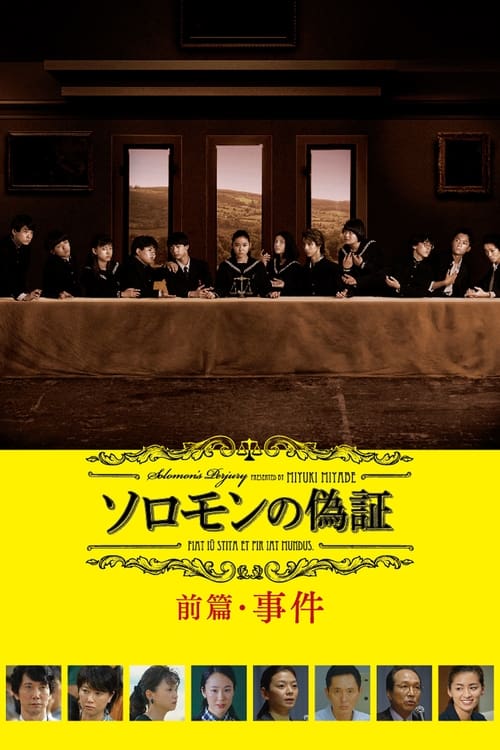
Solomon's Perjury 1: Suspicion
2015
No user ratings available yet
Representation score: 7.4 out of 10
Representation Score
Fair
2015
Director
Izuru Narushima
Runtime
149 minutes
Average Rating
No ratings yetNew Showbiz Analysis
Solomon's Perjury 2: Judgment is a social drama that emphasizes institutional critique rather than identity politics. The film's strength lies in dismantling power hierarchies, enabling students to challenge teacher and administrator authority. However, the film lacks clear representations of diverse identities. The social environment appears homogeneous, and there is no obvious focus on LGBTQ+ or disability-related narratives. Ultimately, the film's merit is in its postmodern approach to truth, although it remains limited in its demographic range.
Category Breakdown
The film centers on a criminal investigation into a student's death. There are no explicit depictions of non-straight or non-cisgender identities within the story.
Young characters show significant intellectual influence by questioning adult-led structures. This overturning of traditional power dynamics supports meaningful roles for girls and boys in the story.
As a Japanese production, the casting reflects the local population. The narrative suggests a fairly uniform social environment within the school setting.
The story criticizes institutional corruption by emphasizing personal truth over official doctrine. It examines the flaws of established systems through a student-led tribunal.
There is no specific indication of characters with visible or invisible disabilities in this production.
Present on Screen
Limited or Absent
Official Synopsis
A group of junior high school must find out the truth of their classmate's death is he was killed by someone or committed suicide.
2015

2005
2025

2001

2018

1991

2002
2014
No reviews yet. Be the first to share your thoughts on this movie!
Use the rating form above to leave a star rating and optional review.