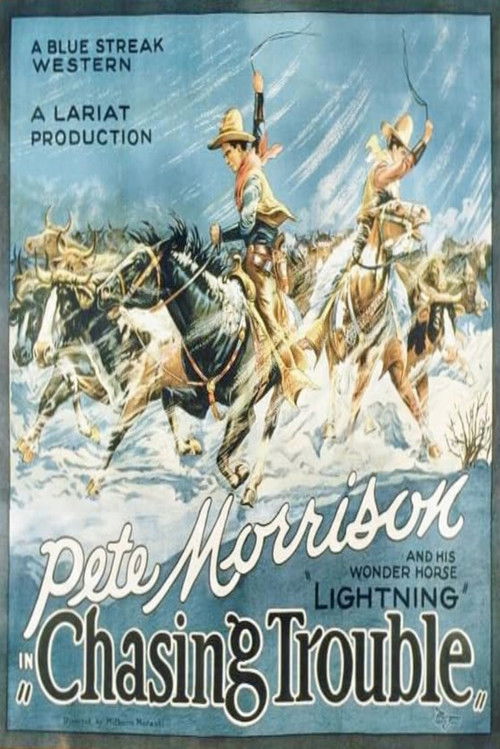
Chasing Trouble
1926
No user ratings available yet
Diversity score: 2.5 out of 10
1926
PassedDirector
Milburn Morante
Runtime
52 minutes
Average Rating
No ratings yetSynopsis
Slim Duane, a wandering cowpuncher in search of his stolen horse, is forced by a fugitive to exchange clothes and finds himself stranded and broke in a town. He is seen by Eben Purkiss, who mistakenly identifies him as the fugitive (Matt Holden) and rides for the sheriff.
Overall Score
Limited
Category Breakdown
LGBTQ+ Representation
The film follows traditional Western tropes of identity theft and pursuit. There are no depictions of same-sex intimacy or non-cisnormative gender identities.
Gender Representation
The story centers on Slim Duane, a male protagonist navigating a crisis of survival. The plot focuses on male-driven conflict involving a cowpuncher, a fugitive, and a sheriff.
Racial & Ethnic Diversity
The narrative is framed within a genre that historically prioritizes Anglo-Saxon protagonists. There is no mention of non-white characters in the central plot.
Religious & Cultural Diversity
The plot utilizes a standard Western framework emphasizing individualist morality. It focuses on reclaiming property and restoring order through law enforcement.
Disability Representation
The available narrative details do not mention any characters possessing visible or invisible disabilities.
Strengths
Areas for Improvement
AI Analysis
Bucking the Truth is a conventional silent-era Western that adheres strictly to the genre's established social hierarchies. The narrative focuses on a male protagonist's struggle with identity and property, reinforcing traditional masculine agency. The film lacks intersectional complexity, as the plot revolves around a male-centric conflict between a cowpuncher, a fugitive, and a sheriff. There is no evidence of diverse casting or the subversion of 1920s social norms. Ultimately, the film functions as a standard genre piece. It prioritizes traditional Western values of justice and individualist morality without offering any disruption to the era's homogeneous social expectations.
No reviews yet. Be the first to share your thoughts on this movie!
Use the rating form above to leave a star rating and optional review.