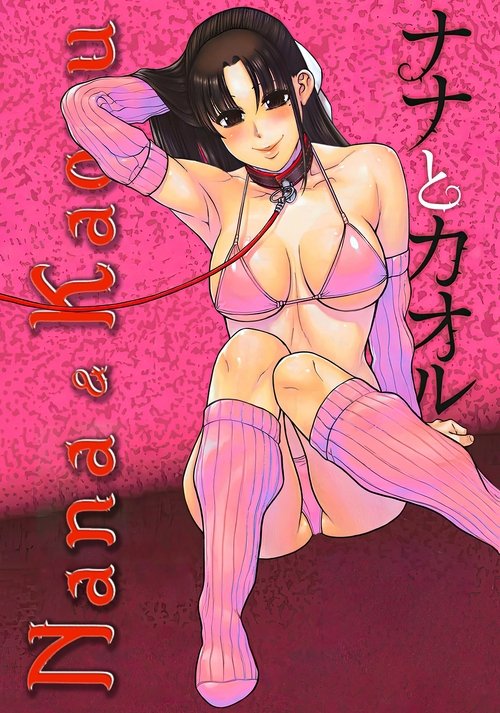
Nana and Kaoru
2011
No user ratings available yet
Representation score: 5.1 out of 10

Representation Score
Good
2024
TV-MADirector
Pierre Ito
Runtime
31 minutes
Average Rating
No ratings yetNew Showbiz Analysis
Shin Yaranai ka presents a brief but impactful disruption of standard social scripts. By centering a male-to-male encounter driven by immediate attraction, the film allows its characters to express their sexuality freely, bypassing traditional courtship expectations. While the film offers progressive value through its focus on non-traditional interpersonal dynamics, its scope remains narrow. The narrative is heavily male-dominated and lacks a diverse cast of genders or ethnicities, keeping the subversion contained. Ultimately, the work functions as a study of individualistic, secular impulse. It trades institutional morality for a moment of spontaneous connection, though it remains limited by its specific focus.
Category Breakdown
The story focuses on a spontaneous sexual encounter between two men, Masaki and Abe. By emphasizing immediate, consensual attraction, the film challenges traditional romantic expectations.
The narrative centers on male desire and empowerment, avoiding traditional clichés of dominance. However, the absence of female or non-binary characters limits the range of gender representation.
As a Japanese production, the film operates within a specific cultural context. There is no indication of a multi-ethnic cast or blending of different racial backgrounds.
The film emphasizes individual impulse over traditional social or familial structures. It frames an unconventional social interaction as the central event, leaning towards secularism.
There is no evidence regarding the depiction of physical or neurodivergent disabilities. No characters are identified as having visible or invisible disabilities.
Present on Screen
Limited or Absent
Official Synopsis
Masaki, an average college student, is walking through the park when he crosses eyes with Abe, an older mechanic sitting on a bench. Upon seeing him, Masaki says to himself "Uho, hot guy!" while Abe promptly unzips his jumpsuit, reveals his "unit" out in the open and asks, "Shall we do it?". They then proceed to the washroom and have sex.
2011

2022

2012

2014
1987
1996
1993
2000
No reviews yet. Be the first to share your thoughts on this movie!
Use the rating form above to leave a star rating and optional review.