When Whales Could Walk
2024
No user ratings available yet
Representation score: 7.1 out of 10
Representation Score
Limited
2013
Director
Gil Kébaïli
Runtime
91 minutes
Average Rating
No ratings yetNew Showbiz Analysis
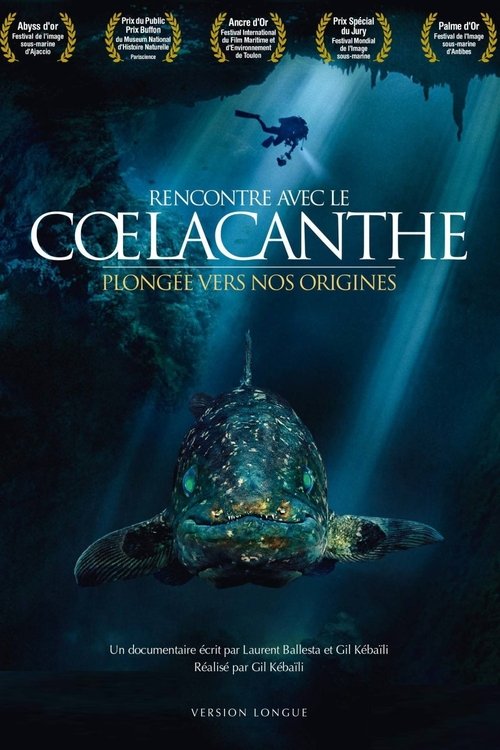
The film serves primarily as a detailed record of the Gombessa Expedition 1, focusing on marine biology and the technical aspects of deep-sea diving. Its main goal is to document the study of the Coelacanth and the challenges faced during the expedition. Since the narrative revolves around scientific discovery and ecological preservation, it does not delve into social or identity-based themes. Although the documentary steers clear of harmful stereotypes, it does not aim to challenge societal norms. Instead, the 'protagonist' is the scientific endeavor itself rather than a diverse cast of characters. Consequently, the lack of multi-layered human representation is a natural outcome of its focus on non-human subjects.
Category Breakdown
The film focuses entirely on marine biology and expedition logistics. There are no LGBTQ+ characters or romantic subplots present in this nature-focused documentary.
The narrative centers on Laurent Ballesta and the technical execution of the dive. The expedition environment is male-dominated, reflecting the specific context of deep-sea diving.
The expedition occurs in South Africa, providing a diverse geographic backdrop. However, ability to act remains with the scientific team, with little focus on racial or ethnic character development.
The film prioritizes evolutionary theory and empirical data over religious frameworks. It operates within a standard scientific exploration model without engaging in cultural critiques.
The documentary emphasizes the extreme physical capabilities required for deep-sea diving. It contains no depictions of neurodivergence or physical disabilities.
Present on Screen
Limited or Absent
Official Synopsis
Gombessa Expedition 1 To dive for the Coelacanth is to go back in time. In 1938, when it was known only as a fossil, a Coelacanth was discovered in South Africa in a fisherman's net. This species bears witness to an evolutionary bifurcation 380 million years ago, and bears the marks of a great event: the day the fish left the ocean for the open air. Does it hold the secret to the transition to walking on land? In 2010, a marine biologist and outstanding diver, Laurent Ballesta, took the first photographs of the Coelacanth in its ecosystem. In April 2013, divers and researchers set down their equipment at the Sodwana base camp in South Africa, in the club founded by Peter Timm (who died in 2014). Six weeks of extreme diving at depths of over 120 meters, in an attempt to film the Coelacanth with a double-headed camera, collect its DNA and tag a subject with a satellite-linked beacon...
2024
2013
2015
2023

2020
2009
2012

2014
No reviews yet. Be the first to share your thoughts on this movie!
Use the rating form above to leave a star rating and optional review.